Squeaky Floors Before You List: What Toronto and Ottawa Sellers Should Know
A squeak on its own is a noise, not a defect. But home inspectors walk every accessible floor and stair, and anything that squeaks, bounces or moves underfoot can end up in the report the buyer reads.
So before you list, walk the house and sort every squeak into one of three groups: noise only, noise with movement, or possible damage. Fix the easy ones, investigate the ones that move, and never try to silence a soft spot. This guide explains what an inspector checks, how to tell the groups apart, and what a pre-listing repair typically costs in Toronto, Ottawa and the rest of Ontario.
What a Home Inspector Checks on Floors and Stairs
A home inspector checks floors, stairs and railings by walking on them and looking at them, not by opening anything up. The 2012 National Standards of Practice published by the Canadian Association of Home & Property Inspectors (CAHPI) is one example of the standard an inspection follows. Under it, the inspector:
- inspects the walls, ceilings and floors
- inspects the steps, stairways and railings
- reports missing or ineffective guards and handrails as potential injury hazards
- describes the floor structure where it can be seen, for example from an unfinished basement
- probes framing only where deterioration is suspected
The same standard says what the inspector does not have to do: find the cause of a condition, move furniture or personal property, find concealed conditions, or work out repair methods and costs.
In practice that means a report records what the inspector felt and where, such as a squeak in the upper hallway or a tread that moves, and may recommend further evaluation. It usually does not say why. That gap is where buyers start guessing, and where a seller who already knows the cause has the advantage.
Some sellers order their own pre-listing inspection to see the report before buyers do. Whether or not you do, the walk-through below covers the same ground for floors and stairs.
Find and Mark Every Squeak
Walk every floor slowly before the listing goes live and mark each squeak with a strip of painter’s tape. Do not settle for “the bedroom squeaks”. Find the spot to within a hand’s width.
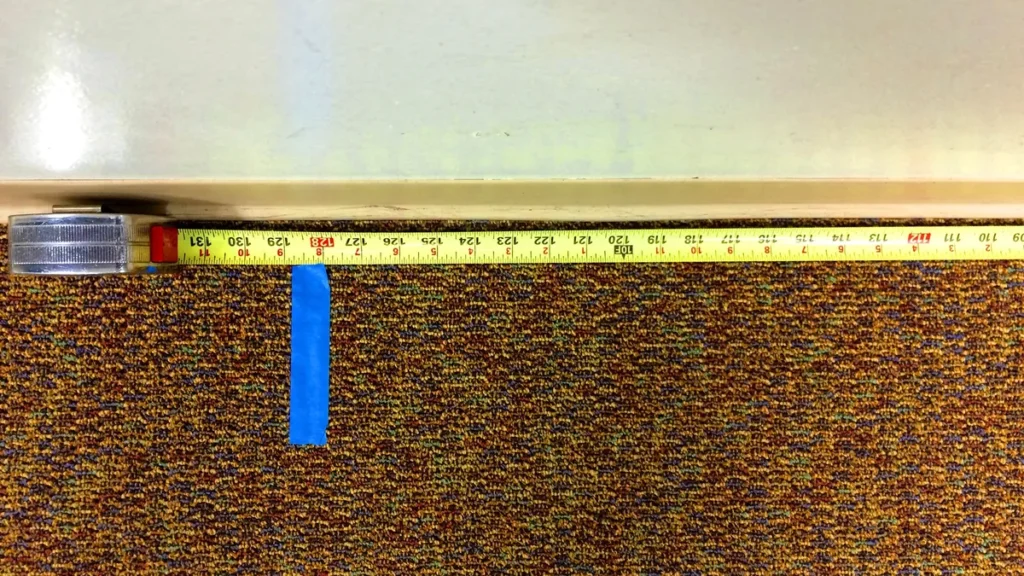
Check these places first, because they carry heavy foot traffic or sit over connections that loosen early:
- hallways and the landing at the top of the stairs
- every stair tread, one at a time
- doorways and entrances
- transitions between flooring materials
- rooms over an unfinished basement, where you can also look from below
- any area with a history of a leak
If you can, do the walk in the heating season. Dry indoor air shrinks wood and loosens floor connections, which is why squeaks are louder in winter. Tarion’s floor squeak guideline describes the same effect. A squeak that is hard to find in July is easy to find in January.
Sort Each Squeak Into One of Three Groups
Sort each squeak by what you feel underfoot, not by how loud it is. Stand on each marked spot and shift your weight from heel to toe, then put it in one of these groups.
Noise only. The floor makes a sound but feels as solid as the rest of the room. This is usually a loose connection between the subfloor and a joist, and it is typically a contained, low-cost repair.
Noise and movement. You can feel the floor give, bounce or dip, or a stair tread rocks under your weight. Have the cause found before anyone fastens anything, because the fix depends on what is moving.
Possible damage. The floor is soft, sags, slopes, or sits under old water staining. Stop treating it as a squeak. A soft spot points to a damaged subfloor sheet or joist, and fastening over it hides the problem from you but not from the inspector.
Why Floors Squeak
Most floor squeaks come from a subfloor panel or plank that has lifted slightly off a joist and rubs against the shank of its nail every time someone steps on it. The wood framing gains and loses moisture with the seasons, the nail loosens in its hole, and the gap opens a little more each winter.
Other sources include:
- finished flooring moving against the subfloor, common with older nailed hardwood
- subfloor panel edges rubbing at a seam with no support underneath
- loose blocking between joists
- a stair tread moving against its riser or stringer
- subfloor weakened by an old leak
This is why powder or lubricant in a seam is not a repair. It quiets the friction for a while, but the panel is still moving, and the noise returns once the powder compacts.
Older Toronto and Ottawa Homes
More than half of Toronto’s homes and more than 40 per cent of Ottawa’s were built before 1981, so a large share of listings have nailed subfloors that have been through at least 45 heating seasons.
In Toronto, the City’s 2021 Census housing backgrounder counts 340,185 of 1,160,895 households (29.3%) in homes built in 1960 or earlier and another 333,990 (28.8%) built between 1961 and 1980.
In Ottawa, the Statistics Canada 2021 Census Profile shows 15.9% of the city’s 407,250 occupied private dwellings built in 1960 or earlier and 28.3% built between 1961 and 1980, about 180,000 homes in total.
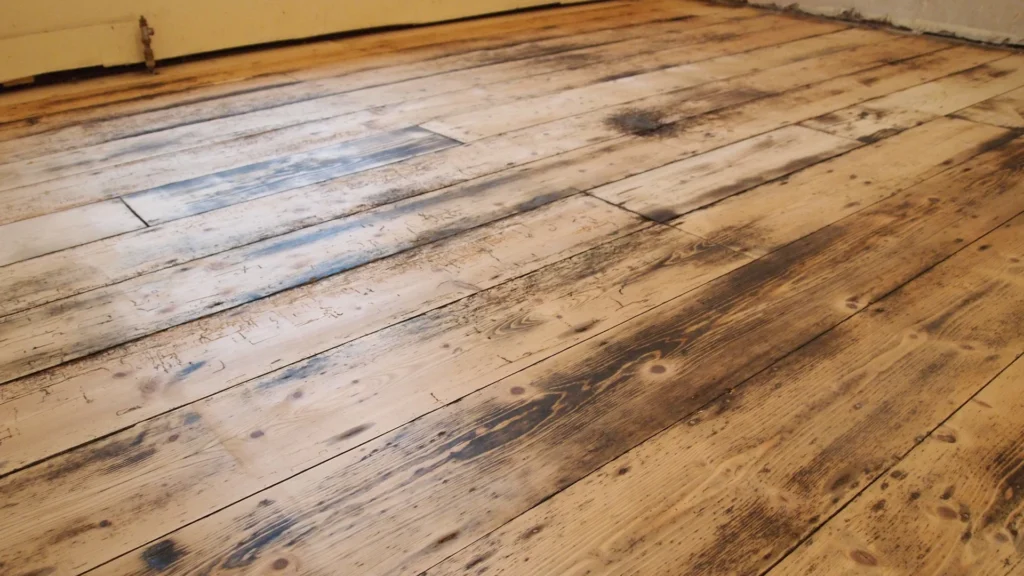
Age changes the construction under the floor. Homes built before about 1955 commonly have a subfloor of 1×6 or 1×8 softwood planks laid diagonally across the joists, as the National Wood Flooring Association’s Hardwood Floors magazine describes, with plywood taking over after the Second World War. A plank subfloor has many more nailed joints than a sheet subfloor, so it has more places to squeak. None of that makes an older floor a problem. It means a squeak in a 70-year-old house is expected, and the question is still whether the floor moves.
Don’t Forget the Stairs
Test the stairs one tread at a time, because inspectors check every stairway and railing, and a loose handrail or guard is a safety item the standard asks them to report.
Step on the front edge, the back and each side of every tread. A tread that squeaks but feels solid usually has a loose joint with the riser or a dried-out wedge underneath, which is a contained repair. A tread that rocks, a split tread, or a handrail that moves when you lean on it should be dealt with before the listing, both for the report and for the people walking through at showings.
If the House Is New
If the home is in its first year of possession, check the Tarion warranty before you pay for a squeak repair. Tarion’s Construction Performance Guidelines treat floor squeaks and stair squeaks caused by loose connections as one-year work and materials items, and exclude squeaks caused by normal shrinkage of materials after construction.
After the first year, squeaks fall outside the warranty. A buyer of a home under seven years old that is enrolled with Tarion can take over the remaining warranty coverage, but that remaining coverage does not include squeaks once the first year has passed.
Should You Fix It Before Listing?
Fix a squeak before listing when it is easy to reproduce, sits in a hallway or on the stairs, and can be reached from below. Investigate first when the floor moves, sags or has a leak history.
Fix it first when:
- it is loud and happens every time you step on the spot
- it is in a hallway, landing or other high-traffic area
- a stair tread moves or a handrail is loose
- there are several squeaks in the same area
- the joists are open to view from an unfinished basement
Investigate first when:
- the floor feels soft or springy
- there is noticeable bounce, sag or slope
- the problem covers a large area
- there has been a leak above or below
- the flooring or subfloor is visibly damaged
- you cannot tell what is moving
Spending money to hide a symptom before a sale is poor value if the cause is bigger. One clear squeak over an unfinished basement, on the other hand, is a quick repair that takes one item off the inspection report.
What a Pre-Listing Squeak Repair Typically Costs
For budgeting, a single squeak or a short run of flooring typically falls between $200 and $1,100, and squeaky stairs typically run $175 to $450 per tread. These are typical budgeting ranges, and your price is set in a written quote after a free diagnostic visit.
Access sets where you land in the range. Open joists in an unfinished basement keep the cost toward the low end, because the finished floor is never touched. A finished ceiling below, or hardwood or tile above, means working through a finished surface and takes longer. A soft spot or water-damaged subfloor is a different scope from a squeak and is quoted separately. Our squeaky floor repair cost guide explains the ranges in more detail.
What a Good Pre-Listing Repair Looks Like
A good repair finds the moving connection first and fastens that, rather than adding screws until the noise stops. The order is always the same: locate the movement, work out which part of the floor is moving and whether it can be reached from below, then repair that part.
If you are getting a contractor to look at it, ask three questions:
What do you think is causing the squeak?
Can you reach it from underneath?
Does the repair stop the movement, or only reduce the noise?
The answers tell you more than a generic quote to “fix a squeaky floor”, and they give you something specific to tell a buyer who asks.
Frequently Asked Questions
Will a squeaky floor lower my home’s appraised value?
In most cases, no. A squeak is not a valuation item on its own, because an appraisal looks at the property as a whole and at comparable sales. It is more likely to come up as a negotiating point after the buyer’s inspection, especially alongside other maintenance items.
Does a home inspector test every floor for squeaks?
No. The inspector walks the accessible floors and stairs and reports what they notice. The CAHPI national standard does not require them to find the cause of a condition, move furniture, or open up finished surfaces.
Is a squeaky floor a structural problem?
Not by itself. A squeak is friction at a loose connection. Sagging, a soft spot, significant bounce, damaged framing or signs of moisture are a different matter and should be investigated before any repair.
Can I fix a squeak myself before listing?
Yes, if the squeak is over an unfinished basement and you can see the joist. A glued shim or a block screwed to the joist and tight under the subfloor stops the movement. If the floor moves, feels soft, or you suspect water damage, find the cause before attempting a repair.
What should I tell a repair contractor before the visit?
Tell them where each squeak is, whether the floor moves, what is underneath (open basement, finished ceiling or another room), whether there has been water damage, and whether the noise changes with the seasons. Photos of the underside help them give you a realistic range before visiting.
The Bottom Line
Sellers do not need to silence every floor noise. Find out whether each squeak is noise from a solid floor or a sign of movement, fix the simple ones before photos and showings, and have anything soft, sagging or water-stained looked at first. It is better to know the cause while the house is still yours than to read about it in the buyer’s report.
If you want the squeaks sorted before you list, book a free diagnostic visit or call (343) 353-8706. You get the cause and a written quote before any work starts.
About this guide: written by the Squeaky Floor Team, a repair-only crew working on squeaky floors and stairs in Ontario.