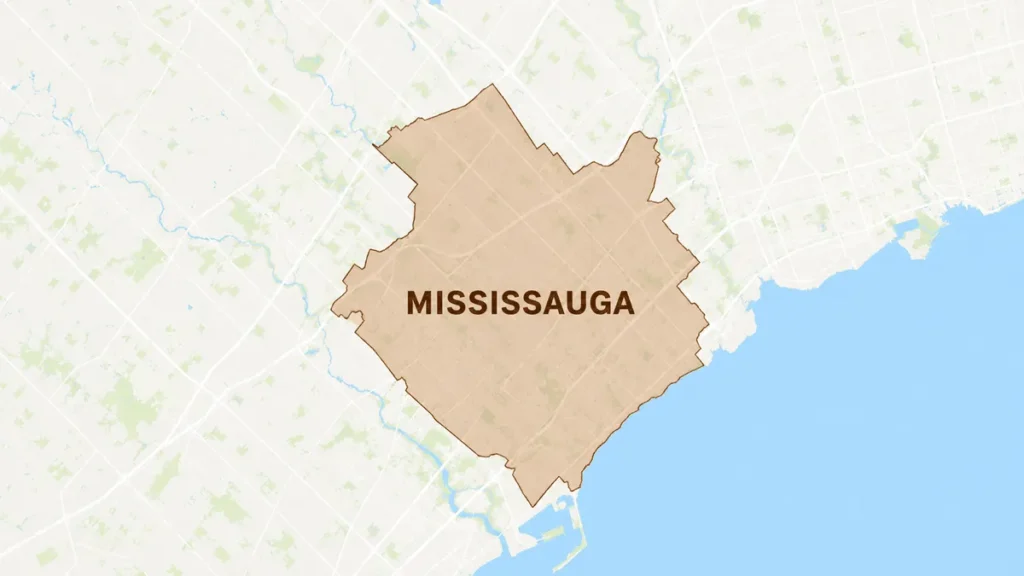
Postwar Lakeview homes Serving Lakeview Free written quotes

Squeaky floor repair in Lakeview

Squeaky Floor repairs squeaking floors and stairs in Lakeview’s postwar houses and the older homes among them.

In the 2001 census, 34.2 per cent of Lakeview’s dwellings dated from 1946 to 1960, more than four times the Mississauga rate.

Get a Free Quote for Your Home

Tell us about your project and we will get back to you within 24 hours.

What can we help with?

So the right crew reviews your project.

No obligation. We reply within one business day.

Lakeview housing history

An aerodrome district that became a postwar suburb

Lakeview’s housing is concentrated in the fifteen years after the Second World War. The City’s community profile records that Curtiss Aeroplanes and Motors opened what it calls Canada’s first aerodrome and flying school here in 1915, that more than 300 people had settled by 1923, and that during the Depression newcomers moved onto cheap land, built their own homes and farmed small plots. By 1950 the area had turned suburban, with subdivisions such as Orchard Heights and Applewood Acres. The profile’s 2001 census figures show the result (City of Mississauga community profile): of 8,420 dwellings, 34.2 per cent were built from 1946 to 1960 against 7.5 per cent city-wide, and 82.0 per cent before 1981. Single-detached houses made up 58.0 per cent against 44.6 per cent city-wide, though 30.8 per cent of dwellings were in apartment buildings of five storeys or more, and 9.0 per cent needed major repairs, against 5.1 per cent for the city. Twenty years on, the 2021 census for the L5E postal area, Central Lakeview, still shows 30.2 per cent of homes built in 1960 or earlier (Statistics Canada, 2021 Census Profile). Houses of 1946 to 1960 sit on plank or early plywood subfloor, now 65 to 80 years old, so a squeak there is usually a loosened nail at a joist.
Lakeview floors by decade

1946 to 1960 houses

34.2 per cent of dwellings in the 2001 census, on plank or early plywood now 65 to 80 years old.

1960s and 1970s houses

41.8 per cent of dwellings dated from 1961 to 1980 in the 2001 census; houses of that era usually have plywood nailed to the joists.

Owner-built Depression-era homes

Self-built housing from the 1930s, where construction varies house to house.

From one of our repairs

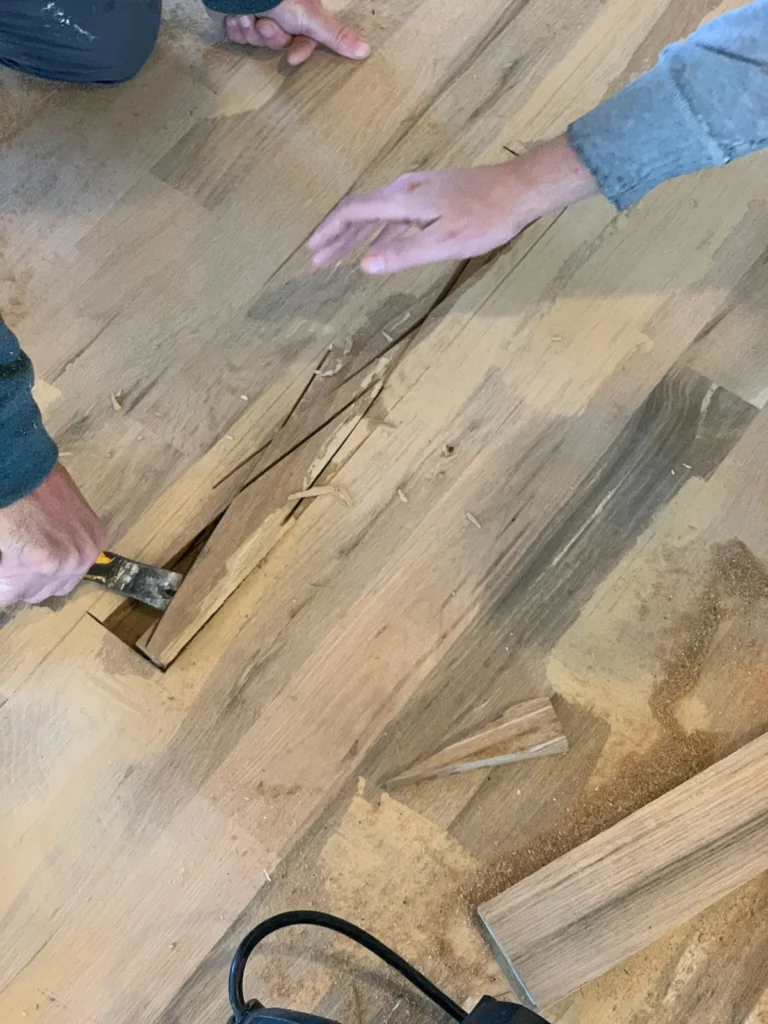
Replacing a split board

A split board in this white oak floor is being chiselled out so a replacement can be fitted in its place. Many of Lakeview’s 1950s floors are still original, and a board that has split is replaced on its own rather than the whole floor.

How we approach a Lakeview house

Postwar framing expected, then checked

Most houses here are postwar, so we expect plank or early plywood and confirm which from the basement before choosing a fix.

Owner-built houses get a closer look

Depression-era self-built homes do not follow one builder's pattern, so joist size and spacing are measured, not assumed.

Repair needs stated plainly

In 2001, 9.0 per cent of Lakeview dwellings needed major repairs, against 5.1 per cent city-wide; if the visit finds rot or a cracked joist, the quote lists it separately.

Apartments are a different job

About three in ten Lakeview dwellings were in buildings of five storeys or more in 2001, where floors are usually concrete.

Our nearest office to Lakeview

The nearest Squeaky Floor office to Lakeview is our Toronto office at 4544 Sheppard Avenue East in Agincourt South-Malvern West. Call to book a free diagnostic visit, and the crew comes to your house in Lakeview for the visit and the repair.

Lakeview squeak repair price ranges

In a 1946 to 1960 Lakeview house the price depends on whether the subfloor is plank or plywood and whether the basement ceiling below is open, and the written quote after your free visit sets it.

Diagnostic Visit

Free

Plank or plywood identified, squeak located
Visit in person, or begin with photos
No charge, no follow-up pressure

Request a Visit

Whole-Room or Subfloor Work

$1,000 to $3,500 typical

Several rooms of loose subfloor
Damaged subfloor sections replaced if needed
Priced once we have walked the rooms

Get a Free Quote
Our Process

Steps for a Lakeview repair

1

Describe the house

Where it squeaks, when, and roughly when the house was built, whether the 1950s, the 1960s or later.

2

Basement check at no charge

We find the moving board and check the joists from the basement where they are exposed.

3

Damage noted separately

The fix and the price in writing, with any damaged framing noted separately.

4

Repair, then a second walk

After the repair we step across the area again with you to check it is quiet.

Client reviews on hardwood and loose-board repairs

5/5

We hired them to fix squeaking and movement in our hardwood floor. They identified the underlying problem quickly and completed the repair without needing to replace the entire floor. Everything now feels solid and quiet.

Jennifer

Direct Client

5/5

We needed an urgent flooring repair after several boards became loose and uneven. The team responded quickly, secured the boards, and corrected the uneven sections. Professional service and a high-quality repair from start to finish.

Robert

Direct Client

5/5

They repaired several damaged hardwood boards in our living room and blended the replacements beautifully with the existing floor. The team was punctual, tidy, and careful throughout the job. You can barely tell where the damage was.

Michael

Direct Client

Lakeview floor questions

What makes Lakeview different from the rest of Mississauga?

Its age profile. In the 2001 census, the City's community figures showed 34.2 per cent of Lakeview dwellings built between 1946 and 1960, more than four times the city-wide 7.5 per cent, and 82.0 per cent built before 1981. It was also 58.0 per cent single-detached against 44.6 per cent city-wide, so a higher share of its housing is older houses than in the city as a whole, although about three in ten dwellings were in apartment buildings of five storeys or more.

Some Lakeview homes were owner-built. Does that change the repair?

It changes how we approach the diagnosis. Depression-era arrivals in Lakeview bought cheap land and built their own homes, which means construction details vary from house to house rather than following one builder's standard. We look at what is there rather than assuming a typical assembly.

Is the new Lakeview Village development going to affect the neighbourhood's housing stock?

Not for some years. Lakeview Village is a 177-acre redevelopment of the former Lakeview Power Generating Station site. Its master plan was endorsed by Council on 6 November 2019, construction of its first residential building launched on 7 October 2024, and the City expects the buildings to be first occupied in early 2029. The existing postwar houses are on separate land and unaffected by it.

Postwar Lakeview house with a squeak?

Book the free visit and tell us roughly when the house was built. The cause and the fix are confirmed before the written quote.

Back to top