Postwar and lakeshore homes Serving Etobicoke Free written quotes

Squeaky floor repair in Etobicoke

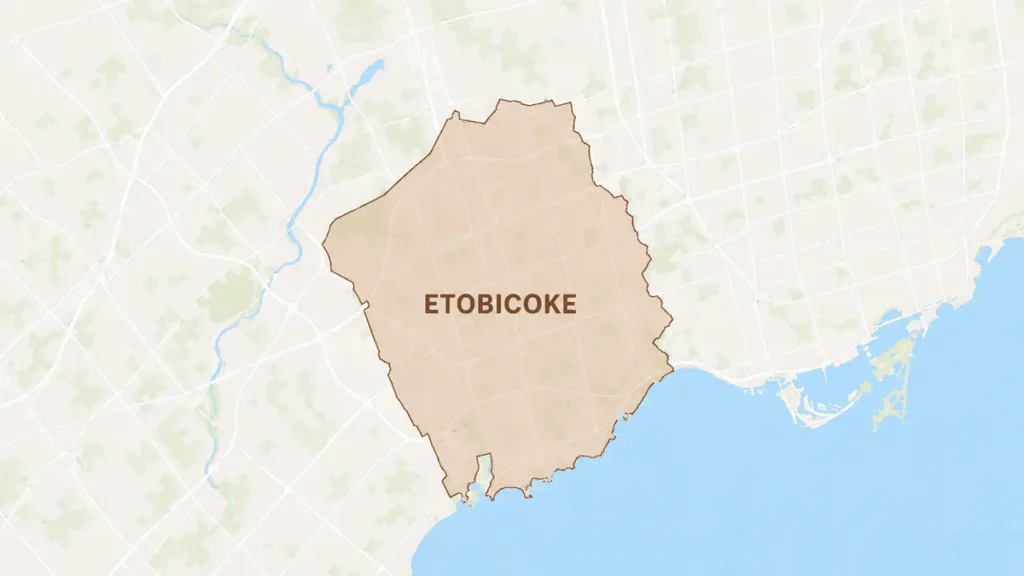
Squeaky Floor finds and fixes the loose board, fastener or subfloor connection making the noise in Etobicoke homes. Etobicoke grew from 19,000 people in 1941 to 156,000 by 1961, while the lakeshore towns of Mimico, New Toronto and Long Branch, which only joined it in 1967, are older.

Get a Free Quote for Your Home

Tell us about your project and we will get back to you within 24 hours.

What can we help with?

So the right crew reviews your project.

No obligation. We reply within one business day.

Postwar suburb, older lakeshore

Etobicoke: a postwar suburb plus three lakeshore towns

Most Etobicoke houses are postwar. The population went from 19,000 in 1941 to 54,000 in 1951 and 156,000 by 1961, and the City of Toronto Archives describes Etobicoke as designed as a modern postwar suburb, with broad roads, separate residential and industrial zoning, and many houses built with large driveways and garages (City of Toronto Archives, Etobicoke: A Modern Suburb). Whole districts went up in single pushes: the Kipling Heights area, 450 acres, was built out between 1956 and 1958. The era-typical floor is plywood subfloor nailed to dimensional joists.

The lakeshore is older. Mimico, New Toronto and Long Branch were separate municipalities until 1967. New Toronto grew around industry, with the Mimico rail yard from 1906 and the Goodyear plant built in 1916 and 1917, but saw little residential building until after the First World War, then went from 2,669 people in 1921 to 11,194 by 1951. Mimico’s housing runs from 1920s to 1940s bungalows plus 1950s and 1960s low-rise apartments. Long Branch, subdivided from 1910, became a village in 1930 and grew from 3,962 people in 1931 to 12,980 by 1966. The Humber Bay Shores condominium towers were never part of the Town of Mimico and stand on concrete floors.
What we fix in Etobicoke homes

Postwar plywood subfloor

Kipling Heights-era houses of the late 1950s and after, on nailed plywood over dimensional joists.

New Toronto and Mimico interwar homes

Houses from the 1920s to the 1940s, built at or before the switch from plank to plywood.

Long Branch mixed streets

Lots subdivided from 1910 and built on over five decades, so neighbouring houses can sit on different subfloors.

From one of our repairs

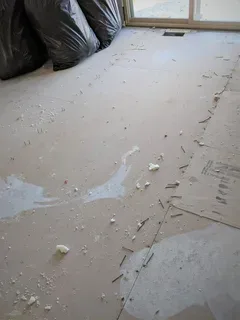
A sheet subfloor with the flooring off

With the flooring taken up, this sheet subfloor is bare, with old staples and marks left by the floor above it. Postwar Etobicoke houses from the Kipling Heights era sit on nailed plywood, and once it is open like this, loose spots are screwed down to the joists.

What decides an Etobicoke repair

Which part of Etobicoke you are in

A 1950s Kipling Heights house and a 1920s New Toronto house are not the same job.

How far the joists span

Where a living room runs the full width of the house, the joists span further between supports and the floor flexes more, which changes where we look.

Free written quote

No obligation, and no phone-only guesses on price.

Repair only

We do not install, sand or sell flooring. We fix the floor you have.

Our Toronto office, serving Etobicoke

Our Toronto office is at 4544 Sheppard Avenue East in Agincourt South-Malvern West. Call to book a free diagnostic visit, and the crew comes to your house in Etobicoke for the visit and the repair.

Etobicoke Squeaky Floor Repair Pricing

These are budgeting ranges; your written quote sets the price. A squeak in a postwar Etobicoke house over an unfinished basement typically falls in the single-squeak tier. Blocking across a long span, or refastening an older lakeshore plank subfloor across a room, moves the job toward the whole-room tier.

Diagnostic Visit

Free

We find the moving joint and check the span
Postwar or lakeshore era confirmed
No pressure to book anything after

Request a Visit

Whole-Room or Subfloor Work

$1,000 to $3,500 typical

Solid blocking across a long joist span
Or a room of plank subfloor refastened
Quote in writing before anything begins

Get a Free Quote
Our Process

How an Etobicoke squeak gets fixed

1

Tell us the area and the spot

Kipling Heights, the lakeshore or somewhere in between, and whether the noise is mid-room or near a wall. A mid-room squeak often points to span; one near a wall, to a loose panel edge.

2

We check the floor from both sides

On the free visit we find the noise from above, then look at the joists, the centre beam and the subfloor from below where the basement allows.

3

Scope and price in writing

Scope and price in writing, whether that is a few screws or blocking between joists to stiffen a span.

4

We stiffen or fasten it, then re-walk it

Once the span is blocked or the panel is tight, we walk the floor again to confirm it is quiet, and explain what caused it.

What customers said about their floors

5/5

We hired them to fix squeaking and movement in our hardwood floor. They identified the underlying problem quickly and completed the repair without needing to replace the entire floor. Everything now feels solid and quiet.

Jennifer

Direct Client

5/5

We needed an urgent flooring repair after several boards became loose and uneven. The team responded quickly, secured the boards, and corrected the uneven sections. Professional service and a high-quality repair from start to finish.

Robert

Direct Client

5/5

They repaired several damaged hardwood boards in our living room and blended the replacements beautifully with the existing floor. The team was punctual, tidy, and careful throughout the job. You can barely tell where the damage was.

Michael

Direct Client

Etobicoke squeaky floor questions

Why do Etobicoke bungalows squeak across the middle of a room?

Usually the joist span. Where a living area runs a long way between the foundation wall and the centre beam, the floor deflects more underfoot. Deflection works the subfloor connection back and forth, and once a nailed panel has a small gap at the joist, walking across the middle of that span is where you hear it. Screws alone may not hold there; solid blocking between the joists stiffens the span.

Our Mimico house is older than the rest of Etobicoke. Does that matter?

Yes. Mimico, New Toronto and Long Branch were separate municipalities until 1967 and predate the postwar boom that built most of Etobicoke, with housing running back to the 1920s and earlier in places, so the floor assembly is closer to plank subfloor than to nailed plywood. We establish which you have before recommending an approach.

We are in a Humber Bay Shores condo. Is that the same as an Etobicoke house?

Not at all. The Humber Bay condominium towers are modern construction on concrete floors and were never part of the historic Town of Mimico. Noise in a building like that generally comes from the flooring or its underlay rather than joist connections, and any work is also subject to your condominium's own rules.

Have a squeak in your Etobicoke home?

Tell us which part of Etobicoke and where in the room you hear it. The visit is free and the quote comes in writing.

Back to top