Loose and hollow tile Grout and bond failure Free written quotes

Tile floor repair

Squeaky Floor repairs cracked, loose and hollow-sounding tile and the failed grout that usually shows up first, treating the movement underneath rather than just the tile.

A tile that clicks or sounds hollow is telling you the bond underneath has released.

Get a Free Quote for This Repair

Tell us about your project and we will get back to you within 24 hours.

What can we help with?

So the right crew reviews your project.

No obligation. We reply within one business day.

Tile does not squeak, but it does tell you things

Tile is rigid, so it does not creak the way a wood floor does. What it does instead is crack, come loose, and sound hollow when you tap it, and all three usually point at the same underlying issue: movement in the floor beneath. Tile is bonded to a substrate, and that bond assumes the substrate will stay still. If the subfloor deflects under load because the joist span was marginal or a panel has loosened, the tile above has no ability to flex with it. The bond releases in that area, which is what produces the hollow sound, and eventually a tile cracks or a grout line fails. Grout almost always goes before the tile does, because it is the weakest element in the assembly and it shows movement first. That is why we treat a run of cracked grout as information rather than a cosmetic job. Regrouting a floor that is moving underneath gets you a tidy floor and the same cracks in a year.

What loose and hollow tile is telling you

The tile is rarely the problem. It is the messenger.

Hollow sound when tapped

The bond between tile and substrate has released in that area, usually because something below moved.

Cracked grout lines

Grout is the weakest part of the assembly and fails first, which makes it an early warning rather than a cosmetic issue.

A cracked tile in the middle of a floor

Frequently deflection underneath rather than impact damage, particularly if it follows a line.

Movement in the subfloor below

The root cause in most cases. Tile cannot flex, so any deflection beneath it goes into the bond.

Failed grout in a wet area

Around a shower or bath, failed grout also lets water reach the substrate, which makes it urgent rather than cosmetic.

How we repair tile

Sound the floor first

Tapping across the area maps where the bond has released, which is usually a larger area than the visible damage.

Check what is moving below

If the substrate deflects, replacing tiles without addressing it produces the same failure again.

Replace and rebond properly

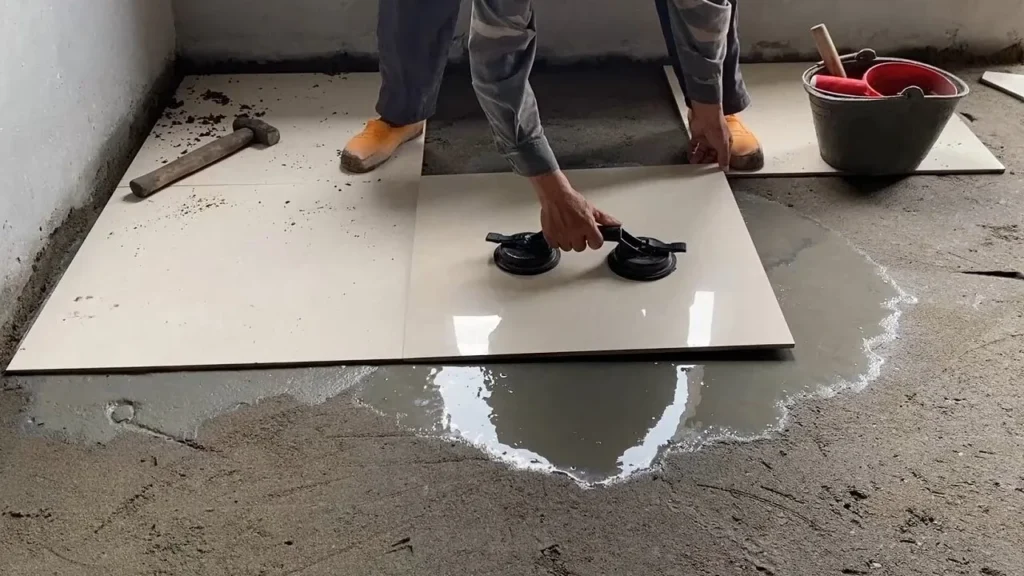
Affected tiles lifted, the substrate prepared, and the replacements set so the bond is sound.

What tile floor repair typically costs

A starting range based on published Ontario cost data for this kind of work, not our confirmed rate card. Matching an existing tile is often the deciding factor on scope.

Our Process

From your call to a sound tile floor

1

Tell us what you are seeing

Cracked grout, a loose tile, or a hollow sound. Each says something different about the cause.

2

We ask about matching tile

Whether you have spares from the original job, because that often decides what is possible.

3

Written quote after sounding

We map the affected area before quoting, since it is usually larger than the visible damage.

4

Repaired and rebonded

Tiles replaced, substrate prepared, and the surrounding area checked again.

What homeowners tell us

Real feedback from customers we have worked with.

5/5

We needed an urgent flooring repair after several boards became loose and uneven. The team responded quickly, secured the boards, and corrected the uneven sections. Professional service and a high-quality repair from start to finish.

Robert

Direct Client

5/5

We hired them to fix squeaking and movement in our hardwood floor. They identified the underlying problem quickly and completed the repair without needing to replace the entire floor. Everything now feels solid and quiet.

Jennifer

Direct Client

5/5

They repaired deep scratches and chipped areas in our hardwood flooring. The available repair options were explained clearly and the results were excellent. The floor looks refreshed, and the damaged spots are no longer noticeable.

Amanda

Direct Client

Tile floor repair questions

Why does our tile sound hollow in places?

Because the bond between the tile and the substrate has released in that area. Tapping a well-bonded tile gives a solid, dull sound; where the adhesive has let go there is a small air gap and it rings hollow. It does not always mean the tile is about to fail, but it does mean that area is no longer supported the way it was intended to be, and it is worth knowing how far it extends.

Our grout keeps cracking in the same place. Why?

Because something underneath is moving, and grout is the weakest element in the assembly so it shows that movement first. Regrouting alone will produce the same crack again, usually within a year. The useful question is what is deflecting below, whether that is a marginal joist span, a loose subfloor panel, or a substrate that was not rigid enough for tile in the first place.

Can you match our existing tile?

It depends entirely on the tile and how old it is. Current stock lines are often matchable; discontinued ones frequently are not, and even the same product from a different batch can vary in shade. This is why we ask early whether you have spares from the original installation. If an exact match is not possible we will tell you before you commit rather than after.

Is a cracked tile a structural problem?

Usually not structural in the sense of the house being unsafe, but it is often a sign of deflection rather than impact, particularly if the crack runs in a line across several tiles rather than radiating from a point. That points at the floor beneath flexing more than a tiled floor should. We would want to look at what is under it rather than just replacing the tile.

Should failed grout in a bathroom be treated as urgent?

More urgent than elsewhere, yes. In a wet area, grout and the sealant at changes of plane are what keep water from reaching the substrate. Once they have failed, water gets behind the tile and into the material underneath, and that turns a small repair into a much larger one. It is worth addressing promptly rather than waiting.

Tile that clicks, cracks or sounds hollow?

Get a free written quote that addresses what is moving underneath, not just the tile.

Back to top