Why floating floors make noise for different reasons
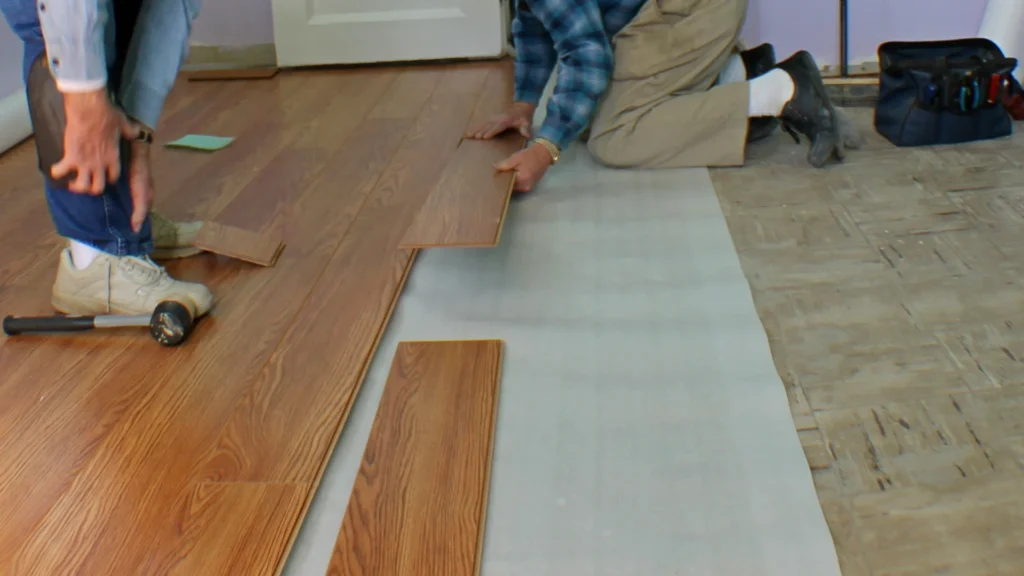
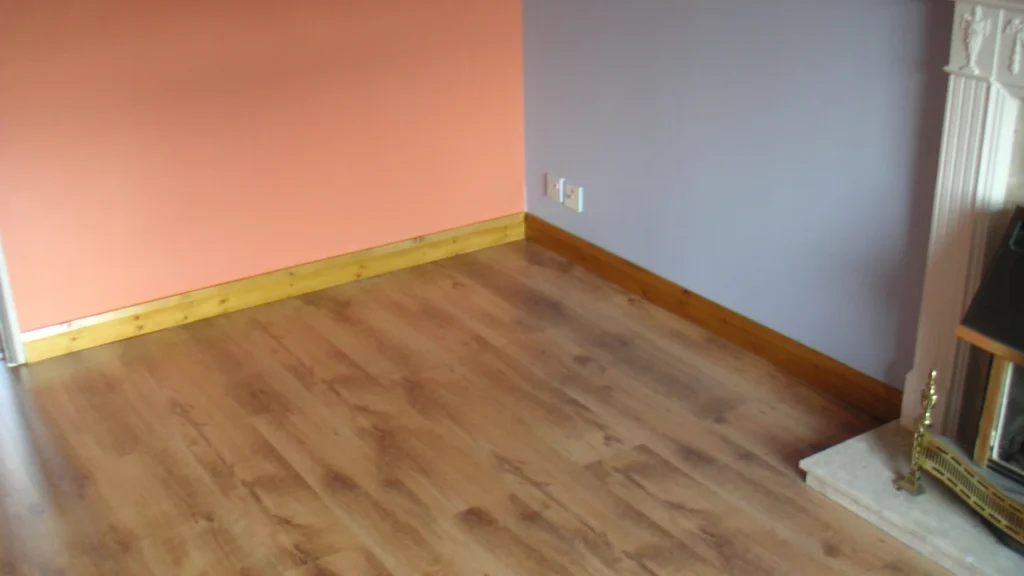
Laminate and luxury vinyl plank are usually floating floors, which means they are not fastened to the subfloor at all. The planks lock to each other and the whole assembly sits loose on an underlay, free to expand and contract as a single sheet. That design avoids the seasonal fastener movement that makes nailed hardwood squeak, but it has its own failure modes. If the expansion space around the perimeter was left too small, or a cabinet, trim nail or transition screw pins the floor down, it has nowhere to go when it expands and it buckles or peaks at a seam. If the subfloor beneath is not flat, the planks bridge a low spot and you get a hollow, clicking sound underfoot where the floor deflects into the void. If a click joint has separated, the planks move against each other and you hear a distinct tick rather than the groan of a nailed floor. Glue-down vinyl is different again: there the usual problem is a bond that has released in one area, often because of moisture from below.