East York: two build eras, two kinds of squeak
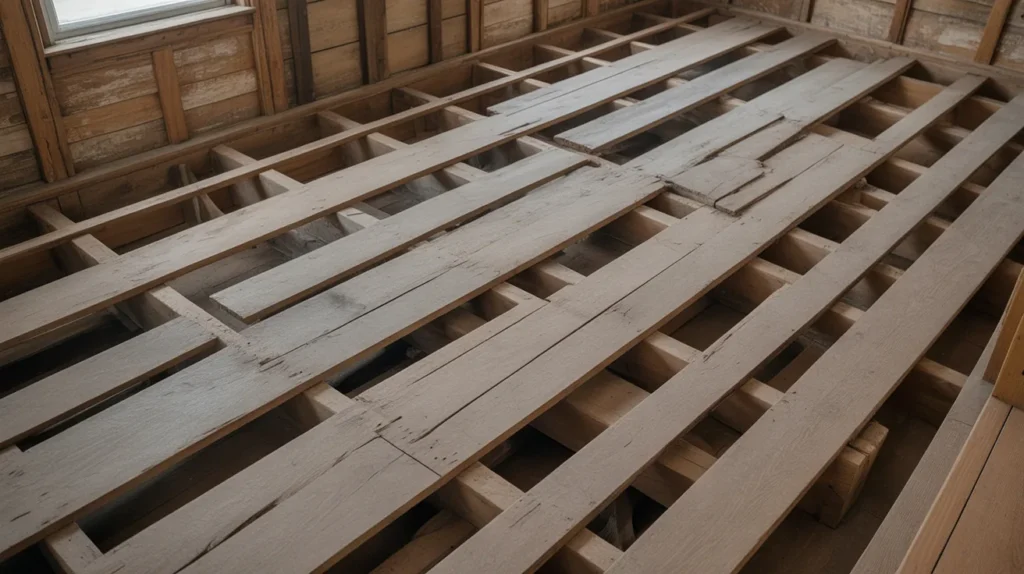
East York houses come from two eras, and they squeak for different reasons. The first wave followed the Prince Edward Viaduct of 1918. When residents voted to leave York Township and East York was incorporated on 1 January 1924, it had just under 20,000 people, few roads and schools, and no sewers or sidewalks, and it grew quickly as new homes went up (City of Toronto Archives, East York 100). Houses of the 1920s and 1930s were built while plank subfloor nailed across the joists was still standard, and after nearly a century they squeak at the board-to-nail connection.
The second wave came in the late 1940s, when the government built inexpensive homes for returning veterans and their families, including the houses around Topham Park, predominantly single detached with front yards and back gardens. They went up at the changeover from plank to plywood subfloor, so either is possible. Since then many single-storey bungalows have gained a second floor, which puts new framing, new load and often a new staircase onto joists sized for one storey.