Two heritage cores in a mostly post-1990 town
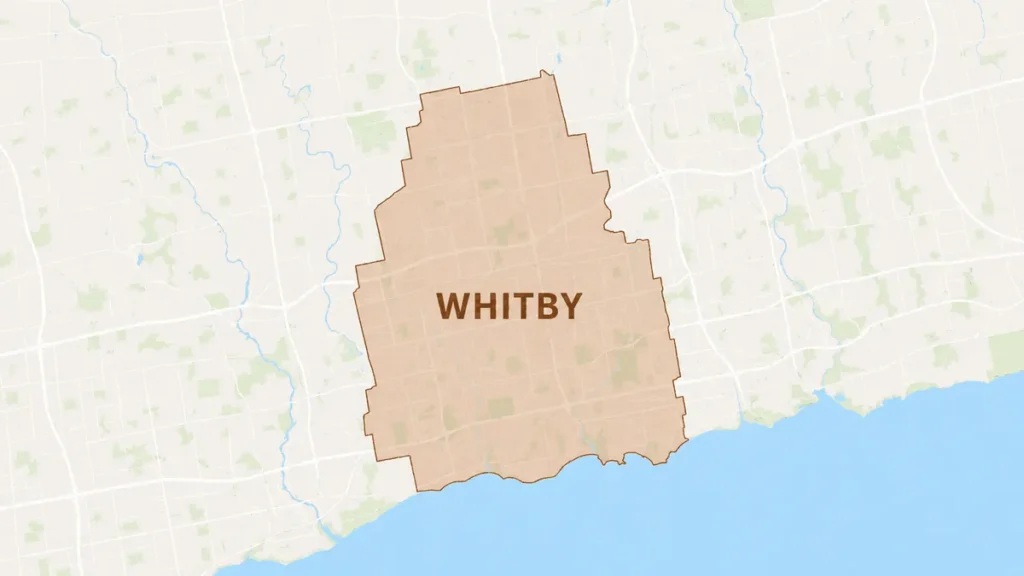
Whitby’s housing is newer than its history. The present town dates from 1 January 1968, when the Town of Whitby and Whitby Township amalgamated, and the 2021 census shows most of its homes are recent: of 46,460 occupied dwellings, 8.2 per cent were built in 1960 or earlier, 16.6 per cent from 1961 to 1980, 17.1 per cent from 1981 to 1990 and 58.2 per cent in 1991 or later (Statistics Canada, 2021 Census Profile). The old fabric sits in two heritage conservation districts (Town of Whitby, heritage conservation districts). Werden’s Plan, in downtown Whitby, has 250 properties. Brooklin’s district has 169, in a village founded in 1840 around a flour mill on Lynde Creek, first called Winchester and renamed at a meeting of about 300 inhabitants on 11 August 1847. Brooklin’s heritage core is a small part of north Whitby, though: in the L1M postal area, which takes in Brooklin and the north of the town, 68.7 per cent of homes were built in 2001 or later. For floors that means three kinds of job: plank subfloor in the heritage houses, plywood in the 1961 to 1990 subdivisions, now 35 to 65 years old, and fastening or panel faults in the newest homes.