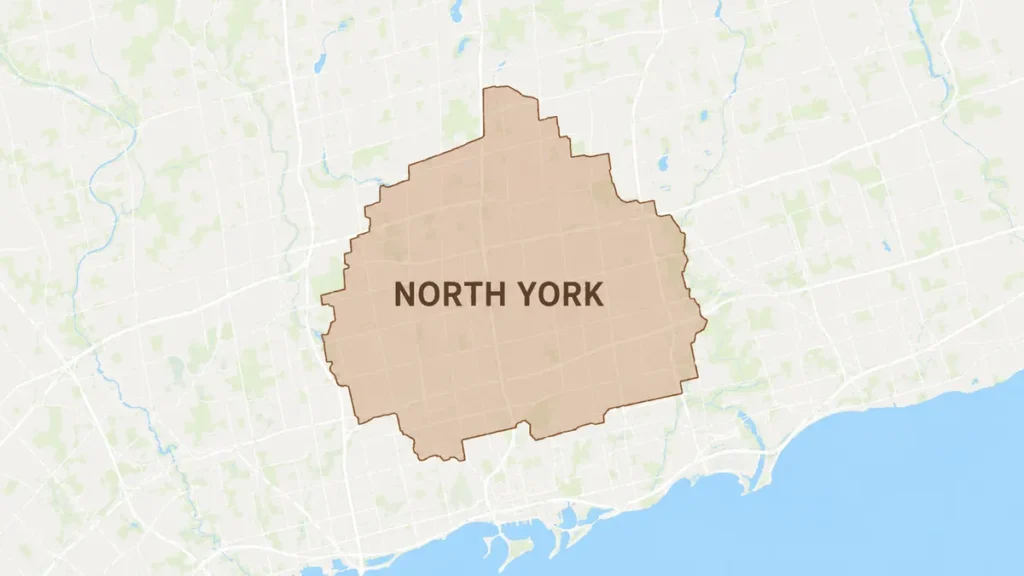
Don Mills and Willowdale floors Serving North York Free written quotes

Squeaky floor repair in North York

Squeaky Floor finds and fixes the loose board, fastener or subfloor connection making the noise in North York homes. North York’s population surged from the 1950s, and Don Mills, one of Canada’s first planned communities, was designed and built out between 1952 and 1965.

Get a Free Quote for Your Home

Tell us about your project and we will get back to you within 24 hours.

What can we help with?

So the right crew reviews your project.

No obligation. We reply within one business day.

Don Mills and Willowdale

North York: a 1950s build-out around older Willowdale streets

Most North York houses are mid-century, because the population surged from the 1950s (City of Toronto Archives, North York centennial exhibit). Don Mills shows the pace. As late as 1950 the area held around 20 farms; E.P. Taylor had assembled 2,000 acres by 1952; and it was designed as a model community between 1952 and 1965, in four quadrants around a shopping centre, with modernist houses on winding roads and culs-de-sac. The era-typical floor in those houses is plywood subfloor nailed, not glued, to the joists, now more than sixty heating seasons old.

Willowdale runs earlier. Its single-family homes range from 1910 to 1950s construction: one and two storey pre-war houses and modest one-and-a-half storey postwar ones. From the 1990s many were replaced by large two-storey houses on the same lots, and high-density building is confined to Yonge Street. A replacement house has a modern floor even when the houses either side are seventy years older, so on a Willowdale street we confirm the floor, not the address, before quoting.
What we fix in North York homes

Don Mills modernist houses

Low-roofed 1950s and 1960s houses, where nailed plywood panels have worked loose at the joists.

Willowdale pre-war houses

One and two storey houses from before the war, old enough to sit on plank subfloor rather than plywood.

Replacement houses on old lots

Post-1990 rebuilds, where a squeak is more often a fastener that missed a joist than age.

From one of our repairs

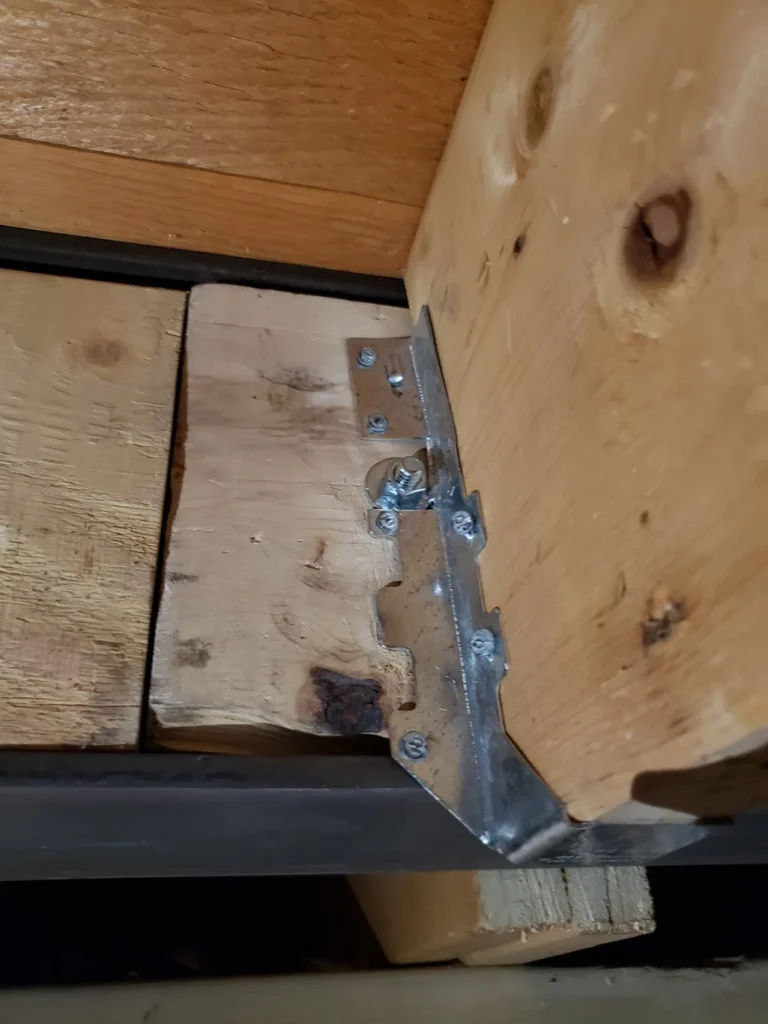
A joist hanger on a steel beam

This close-up from below shows a joist held to a steel beam by a screwed metal hanger. In North York’s post-1990 replacement houses, a squeak is more often a fastener problem than age, so connections like this one get checked first.

What we check first in a North York house

Which build era the floor belongs to

A 1920s Willowdale house and a 1960s Don Mills house sit on different subfloors and are fastened differently.

Whether the house is original or rebuilt

A replacement house on an old Willowdale lot has modern framing, so the cause and the fix are different.

What the basement allows

An open basement ceiling lets us fix a main-floor squeak from below; a finished one means working from above.

Quote in writing

The visit is free, and nothing begins before you have seen scope and price.

Our Toronto office, serving North York

Our Toronto office is at 4544 Sheppard Avenue East in Agincourt South-Malvern West. Call to book a free diagnostic visit, and the crew comes to your house in North York for the visit and the repair.

North York Squeaky Floor Repair Pricing

These are budgeting ranges; your written quote sets the price. In a mid-century North York house, a main-floor squeak over an unfinished basement typically sits in the single-squeak tier. A squeak under a finished basement ceiling, or loose plywood across several rooms, moves the job toward the whole-room tier.

Diagnostic Visit

Free

We trace the squeak to a joist or panel seam
We confirm whether the house is original
No pressure to book anything after

Request a Visit

Whole-Room or Subfloor Work

$1,000 to $3,500 typical

Several rooms of panels moving on their nails
Finished ceilings worked around from above
Quote in writing before anything begins

Get a Free Quote
Our Process

How a North York squeak is found and fixed

1

Tell us if the house was rebuilt

Include whether the house is original or a rebuild, and if the basement is finished. Those two answers narrow the likely cause.

2

We locate it at the joist

On the free visit we find the noise from above, then mark it against the plywood seams and joists from below where we can see them.

3

A written quote with the method

Scope and price in writing: shims, blocking or screws driven up from below, or trim-head screws from above if the ceiling is finished.

4

We fasten it and re-walk it

We draw the panel tight to the joist, walk the floor again to confirm the noise is gone, and show you what moved.

What customers said after a loose floor was fixed

5/5

We hired them to fix squeaking and movement in our hardwood floor. They identified the underlying problem quickly and completed the repair without needing to replace the entire floor. Everything now feels solid and quiet.

Jennifer

Direct Client

5/5

We needed an urgent flooring repair after several boards became loose and uneven. The team responded quickly, secured the boards, and corrected the uneven sections. Professional service and a high-quality repair from start to finish.

Robert

Direct Client

5/5

They repaired several damaged hardwood boards in our living room and blended the replacements beautifully with the existing floor. The team was punctual, tidy, and careful throughout the job. You can barely tell where the damage was.

Michael

Direct Client

North York squeaky floor questions

Is Don Mills housing in North York old enough to squeak?

Comfortably. Don Mills was designed and built out as a model community between 1952 and 1965, which makes the houses sixty to seventy years old. The era-typical subfloor is plywood nailed to the joists rather than glued and screwed, and six decades of seasonal movement is more than enough for those connections to loosen.

Our Willowdale house in North York was rebuilt larger on the original lot. Which era applies?

The new structure, as far as the floor goes. Large replacement houses have gone up on Willowdale lots since the 1990s, and where the old house was replaced rather than renovated you have modern framing and a modern subfloor, so a squeak is more likely to be a construction detail, such as a fastener that missed a joist, than age. We look at what is under the floor rather than going by the street.

Does a pre-war Willowdale house squeak differently from a Don Mills house?

It can. Willowdale's houses run from 1910 to the 1950s, so a pre-war Willowdale house may sit on plank subfloor, where individual boards work loose on their nails. Don Mills went up after plywood became the standard subfloor, so a squeak there is more often a nailed panel moving at a joist. We confirm which you have before choosing the fix.

Is a North York floor squeaking?

Tell us whether the house is original or rebuilt and where you hear it. The visit is free and the price comes in writing.

Back to top