How to Fix a Squeaky Floor Without Removing the Carpet
You can fix most squeaks under carpet without lifting it. Either close the gap between the subfloor and the joist from the basement below, or drive a snap-off screw through the carpet into the joist from above.
The screw is not the hard part. Finding exactly what is moving is. A screw driven a few inches from the problem holds nothing, and adding more screws without finding the source turns a small repair into a row of holes in the subfloor.
One check before you start: if the house is in its first year of possession, a squeak from a loose floor connection is a Tarion warranty item. Report it to the builder before repairing it yourself.
Find the Exact Spot That Squeaks
Locate the squeak to within a few inches before you touch a tool. Have one person walk slowly across the carpet while another listens, from the basement if the floor is open below, or from the same room if not. Mark the centre of the noise with a strip of painter’s tape on the carpet.
Working alone, walk slowly and note where the squeak starts and stops over several steps, rather than judging from a single step. Measure the taped spot from two walls so you can find the same point from the basement.
Look for squeaks in the heating season if you can. Dry indoor air shrinks the wood and loosens floor connections, which Tarion’s floor squeak guideline also notes, so a squeak is easier to reproduce and locate in winter.
Why Does a Carpeted Floor Squeak?
The noise comes from the subfloor, not the carpet. A subfloor panel or plank has lifted slightly off a joist and rubs against the shank of its nail as you step on it. Carpet and underlay soften the sound of footsteps, but they do nothing about friction underneath them.
Other sources include:
- subfloor panel edges rubbing at a seam with no support below
- a gap between the subfloor and the top of a joist
- loose or damaged blocking between joists
- old hardwood left under the carpet moving against the subfloor
- a joist or subfloor rubbing on a duct, pipe or cable
- a subfloor weakened by an old leak
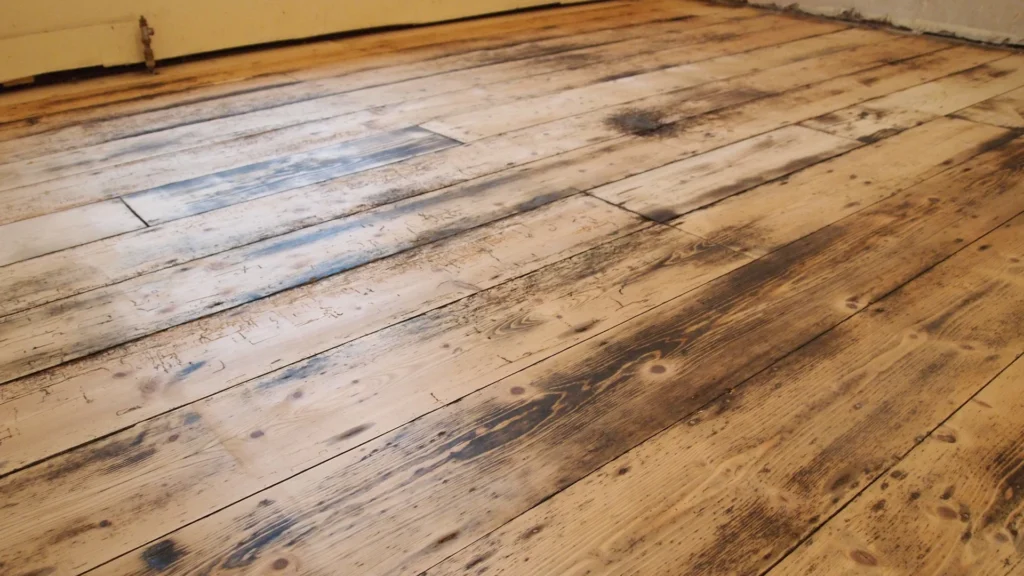
In older homes there is often more than one layer under the carpet. Carpet is frequently laid over the original hardwood, and homes built before about 1955 commonly have a plank subfloor laid diagonally across the joists. Each layer is a place the noise can start, and each one changes how long a screw needs to be.
Carpet laid straight onto a concrete slab is a different case. There are no joists and no nails, so a squeak there usually comes from wood panels or sleepers laid over the concrete that have lost contact with it.
Find the Joist Under the Carpet
Joists are commonly 16 inches on centre, but confirm where they are before any screw goes in from above. Ways to find them:
- From below: in an unfinished basement, measure the joist positions from a wall and transfer the measurement upstairs.
- Floor registers: a heating register usually sits in the bay between two joists, so the joists lie just either side of it.
- Direction: in many houses joists run across the shorter dimension of the house; check from below where you can.
- Stud finder: it can help, but a thick pad makes it less reliable.
- Joist-finding screw: carpet squeak kits include a long, thin screw for probing; follow the kit’s instructions for reading it.
Treat a hard stop under the drill as a clue, not proof. You may have hit blocking, a plank or an old hardwood board rather than the joist. Confirm the position against a second method before driving the repair screw.
If You Can Get Underneath the Floor
From an unfinished basement or crawlspace, fix the squeak from below and the carpet is never touched. You can see the joist, the subfloor and the gap, which makes the diagnosis much more reliable.
Small gap between the subfloor and joist
Close a small gap with a thin wood shim. Coat it with wood glue or construction adhesive and tap it in until it is snug. The goal is to close the gap, not to lift the floor, so stop as soon as the shim is firm.
A longer loose section
For a longer run, run a bead of construction adhesive along the joint between the joist and the subfloor, or fasten a cleat to the side of the joist. A cleat is a length of 2×4 glued and screwed to the joist, pressed tight against the underside of the subfloor so the subfloor cannot move down.
Screws driven up from below
Any screw driven up through the subfloor must stop at least 1/4 inch short of the top surface, or the tip will come through into the underlay and carpet. With a 3/4 inch subfloor and a 1 1/2 inch cleat, that means a screw no longer than 2 inches. If there is old hardwood under the carpet, measure the total thickness at a heating register before choosing the length.
Reinforce a subfloor seam
If the squeak sits where two subfloor panels meet, fit blocking between the joists under the seam so both panel edges bear on it. The block must make solid contact with the underside of the subfloor without pushing the panels up.
Repair hardware
Purpose-made squeak brackets screw to the joist and pull the subfloor down from below. They suit a squeak beside a joist where a cleat will not fit. Follow the manufacturer’s instructions for spacing and screw length.
Check for Plumbing, Wiring and Ducts
Look before you drill. Pipes, wiring and heating ducts run through and under floor framing, and a screw driven blind can hit one. Check from below wherever you can, keep clear of the area around registers and fixtures, and if you cannot see what is under the spot, stop and find out before fastening anything.
Fixing a Squeaky Floor From Above Through Carpet
With no access below, use a snap-off screw kit made for carpet. These kits include a depth-control fixture and screws with a scored shank, so the head breaks off below the surface of the floor and the carpet closes over the point of entry.
Installation varies between kits, but the general process is:
- Find the exact location of the squeak.
- Locate and confirm the joist under it.
- Press the kit’s fixture firmly into the carpet over the joist.
- Drive the scored screw through the carpet, underlay and subfloor into the joist until the fixture stops it.
- Snap the head off as the kit directs.
- Add a second screw a few inches along the same joist if the squeak continues.
- Work the carpet pile back over the entry points.
Do not substitute ordinary screws
An ordinary wood screw is the wrong tool here. It leaves a head in the carpet, catches and pulls fibres, and cannot be set below the surface. Use the screws supplied with the kit and follow its instructions.
Take care with loop-pile carpet
Loop-pile (Berber) carpet needs extra care, because a loop caught on the screw threads can pull a run across the carpet. Kit instructions for loop pile typically have you wrap the threads with tape before driving the screw. If you are unsure what kind of carpet you have, test in a closet first or have it assessed before drilling.
What If the Squeak Is Not Directly Over a Joist?
Then it is not a subfloor-to-joist squeak, and a screw into the joist will not fix it. Look instead for:
- a subfloor seam between joists
- loose blocking
- old hardwood moving against the subfloor
- a damaged section of subfloor
- moisture damage
Locating the joist is only part of the diagnosis. If you cannot identify what is moving, more screws will not solve it.
Why Not Just Lift the Carpet?
Because the repair underneath is the same either way, and lifting the carpet adds work and risk. The carpet has to come off its tack strips, the underlay has to be lifted, and afterwards the carpet has to be re-stretched to get it back as tight as it was.
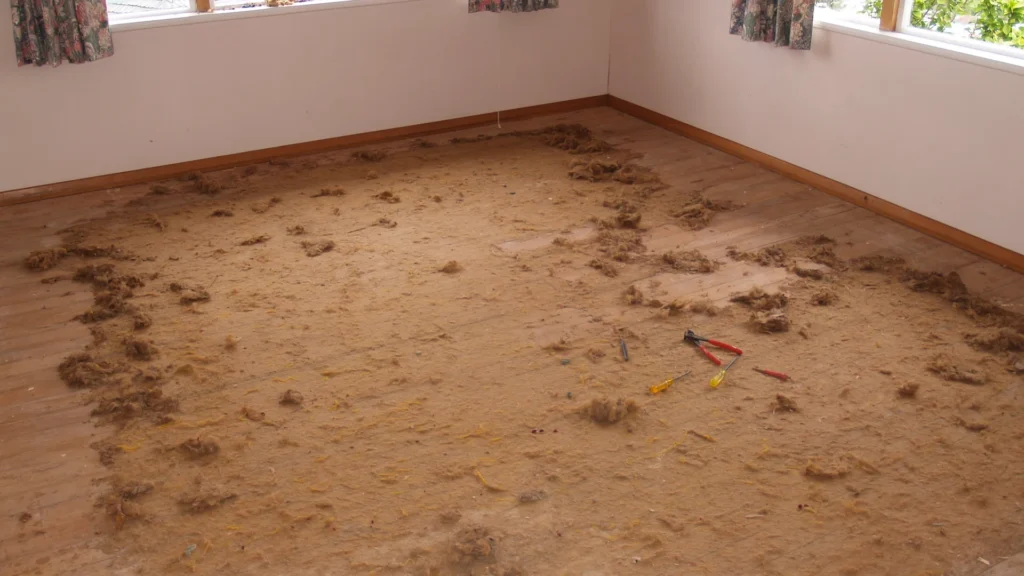
The one case where lifting makes sense is when the carpet is due for replacement anyway. Then the subfloor can be refastened with everything exposed before the new carpet goes down.
What Not to Do
Four mistakes make this repair harder than it needs to be.
Do not add screws everywhere
More screws do not fix a squeak that comes from a specific gap, seam or damaged area. Fasteners elsewhere do nothing except leave holes.
Do not drive screws without confirming the framing
A screw that misses the joist holds nothing. It leaves the squeak where it was and a hole in the subfloor.
Do not force a shim into a tight gap
A shim closes an existing gap. Forced in hard, it lifts the subfloor and creates a new squeak beside the old one.
Do not ignore signs of damage
A squeak in a floor that is soft, sagging, wet or visibly damaged is not a simple noise. Find out why the floor is moving before fastening it.
Fixing Squeaky Stairs Without Removing Carpet
Carpeted stairs are usually a harder job than carpeted floors. The squeak is a loose tread, riser or wedge rather than a subfloor, and the runner hides where a fastener can safely go.
If the underside of the stairs is open, fix it from behind: watch while someone walks on the noisy tread, then glue and screw a block into the tread and riser joint or re-seat a loose wedge. From above, use a fastener system made for carpeted stairs and follow its instructions, because the construction of the staircase decides where a screw can go.
When to Call Someone Instead
Call a repair contractor when you cannot find what is moving or cannot see what is under the spot. A DIY repair is reasonable when you can identify the source and reach it safely. Get it assessed when:
- you cannot tell what is causing the squeak
- the floor is soft, sagging or damaged
- there may be pipes, wiring or ducts under the spot
- there are several layers under the carpet and the source is unclear
- the carpet is loop pile, patterned or hard to replace
- you have tried once and the squeak came back
For budgeting, an under-carpet squeak repair typically falls between $200 and $1,100 for one spot or a short run. That is a typical budgeting range, and your price is set in a written quote after a free diagnostic visit. If you would rather have it done for you, see our squeaky floor repair under carpet service or request a free quote.
Frequently Asked Questions
Can you fix a squeaky floor without removing carpet?
Yes. If the squeak can be reached from below, it is fixed from the basement and the carpet is never touched. Without access below, a snap-off screw kit made for carpet fixes it from above.
Can I screw through carpet to stop a squeak?
Yes, with a kit made for carpet. Its fixture sets the depth and its scored screws break off below the floor surface. Ordinary screws leave a head in the carpet and pull fibres.
How do I find a floor joist under carpet without a stud finder?
Measure from below if the basement is open, use a heating register as a marker since it usually sits between two joists, or use the joist-finding screw supplied with a carpet squeak kit. Joists are commonly 16 inches on centre.
Does talcum powder under the carpet stop a squeak?
No. Powder cannot reach the subfloor joint through carpet and underlay, and even on a bare floor it only quiets the friction for a while. The subfloor keeps moving.
Will a screw always stop a squeaky floor?
No. A screw only works when it lands in the joist and closes the connection that moves. A seam, loose blocking, damaged wood or moisture needs a different fix.
Is a squeaky carpeted floor dangerous?
Not by itself. A squeak is friction at a loose connection. A squeak with softness, sagging, water damage or noticeable movement should be investigated rather than fastened.
The Short Version
Start by finding the movement, not by buying screws. If the subfloor is moving against a joist and you can reach it from below, a glued shim, a cleat, blocking or a squeak bracket fixes it without touching the carpet. If you cannot get underneath, confirm the joist and use a kit made for carpeted floors. If the floor is soft, damaged, wet or moving in a way you cannot explain, find out why before you fasten anything.
About this guide: written by the Squeaky Floor Team, a repair-only crew working on squeaky floors and stairs in Ontario. The steps are general repair practice; follow the instructions supplied with any kit or hardware you use.