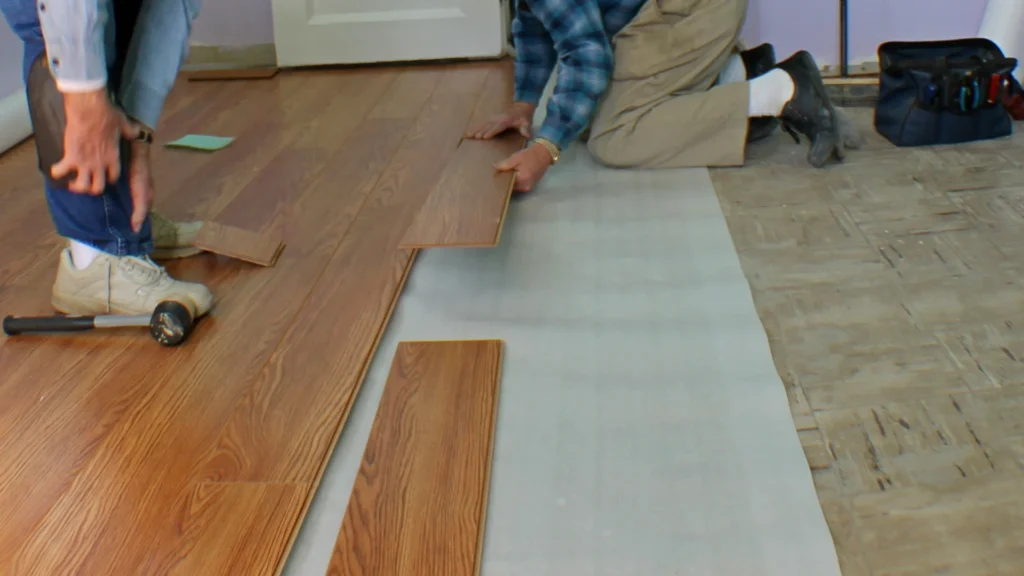
Second-storey specialists Heard from below Free written quotes

Squeaky floors upstairs

Squeaky Floor fixes squeaky upstairs floors, the ones you hear through the ceiling of the room below every time somebody crosses a bedroom.

It is the single most common call we get, and in a two-storey house it is also the most fixable.

Get a Free Quote for This Repair

Tell us about your project and we will get back to you within 24 hours.

What can we help with?

So the right crew reviews your project.

No obligation. We reply within one business day.

Why upstairs floors are the ones you notice

An upstairs floor is not just a floor. It is also the ceiling of the room underneath, and that dual role is why it gets noticed while a ground-floor squeak goes unremarked for years. When somebody walks across a bedroom, the subfloor flexes between the joists, and any connection that has loosened rubs. On a ground floor over a basement that noise dissipates into an empty space. On a second storey it radiates directly into the living room where somebody is sitting. The problem is compounded by house geometry. The dominant older house forms across Ontario, the two-storey semi, the Foursquare, the postwar two-storey, all place bedrooms directly over living space with a staircase running up between them. There is nothing structurally wrong with that, but it means the noisiest floor in the house is also the one you sit under every evening. Access is the other half of the story: if the ceiling below is finished drywall or plaster, we cannot simply reach the joists, so the approach has to be chosen accordingly.
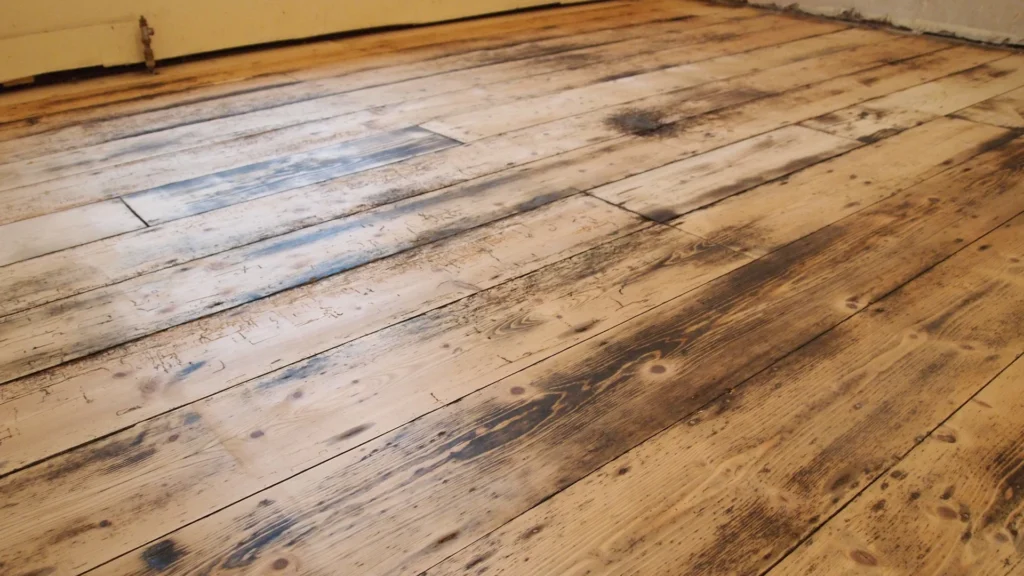
Why you hear it downstairs and not up

The mechanics of an upstairs squeak differ from a ground-floor one in a few specific ways.

The floor is also a ceiling

There is no basement void to absorb the noise, so it radiates straight into the room below.

Joist spans carry real load

Bedroom furniture plus foot traffic works the subfloor connection harder than a ground floor over a slab.

Finished ceilings limit access

Drywall or plaster below means the joists cannot simply be reached, which shapes the repair.

Hallways take concentrated traffic

Upstairs landings and hallways see every trip between rooms, so they loosen first.

Noise travels along the joist

You can hear a squeak several feet from where somebody is actually standing, which makes locating it a skill.

How we quiet an upstairs floor

Find it from both sides

One of us walks the floor while the other listens from the room below, because the noise rarely originates where you hear it.

Repair through the floor above

Where the ceiling below is finished, we work from above with a small, repairable point of entry rather than opening the ceiling.

Test with the door closed

We reproduce the exact conditions you complained about, which usually means someone downstairs listening.

What upstairs squeak repair typically costs

A starting range based on published Ontario cost data for this kind of work, not our confirmed rate card. Access is the biggest variable, so the written quote is where the real number lives.

Multiple Upstairs Rooms

$600 – $2,200 typical

Several rooms or a full upper floor
Includes locating noise across joist runs
Written quote before work begins

Get a Free Quote
Our Process

From your call to a quiet upstairs

1

Tell us where you hear it

Both where you are standing and which room you are in when you hear it. They are often different.

2

We ask about the ceiling below

Finished drywall, plaster, or an open basement. This is the single biggest factor in the approach.

3

Written quote based on access

The price reflects how we have to reach the connection, confirmed before we start.

4

Fixed and tested from below

Someone walks the floor while someone listens downstairs, which is the only test that counts.

What homeowners tell us

Real feedback from customers we have worked with.

5/5

We hired them to fix squeaking and movement in our hardwood floor. They identified the underlying problem quickly and completed the repair without needing to replace the entire floor. Everything now feels solid and quiet.

Jennifer

Direct Client

5/5

They repaired deep scratches and chipped areas in our hardwood flooring. The available repair options were explained clearly and the results were excellent. The floor looks refreshed, and the damaged spots are no longer noticeable.

Amanda

Direct Client

5/5

They repaired several damaged hardwood boards in our living room and blended the replacements beautifully with the existing floor. The team was punctual, tidy, and careful throughout the job. You can barely tell where the damage was.

Michael

Direct Client

Squeaky floors upstairs questions

Do you have to cut into our ceiling to fix an upstairs squeak?

Very rarely. Opening a finished ceiling is disruptive and usually unnecessary, because there are from-above methods that reach the subfloor connection through the floor itself with a small point of entry that is repairable and largely invisible. We would only suggest ceiling access if the cause turned out to be something a from-above fix could not reach.

The squeak seems to move around upstairs. Is that possible?

It is, and it is a normal characteristic rather than a mystery. Sound travels along a joist, so a connection loosening at one point can be audible several feet away, and where you hear it downstairs is often not directly beneath where somebody is standing. That is why we locate these with one person walking and one person listening rather than by guesswork.

Would carpet or underlay upstairs stop the noise?

It muffles the surface sound a little but it does not address the cause, because the movement is happening in the subfloor connection beneath the flooring, not in the flooring surface. Adding carpet over a squeaky floor is a common suggestion and a common disappointment. It is cheaper in the end to fix the connection and then choose your flooring freely.

Our upstairs hallway is the worst part. Why there?

Concentration of traffic. Every trip between bedrooms, the bathroom and the stairs crosses the same few feet of hallway floor, so those subfloor connections are worked far harder than the ones under a bed or a wardrobe. Hallways and landings are the first place we look in a two-storey house.

Does it matter that our upstairs floor is over a room we use in the evening?

Only in that it explains why you noticed. The repair is the same, but knowing which room below is affected helps us test properly, because the whole point is that somebody sitting in that room stops hearing it. We will ask you to sit downstairs while we walk the floor before we call the job done.

Hearing every step from the room below?

Get a free written quote to locate the connection that is moving and quiet it properly.

Back to top