1880s and post-1900 houses Serving The Junction Free written quotes

Squeaky floor repair in The Junction

Squeaky Floor finds and fixes the loose board, fastener or subfloor connection making the noise in Junction homes. The Junction was founded as a village in 1884 and annexed to Toronto in 1909, and its houses split between a prosperous late-1880s wave and a second wave after 1900, with building largely stopped in between.

Get a Free Quote for Your Home

Tell us about your project and we will get back to you within 24 hours.

What can we help with?

So the right crew reviews your project.

No obligation. We reply within one business day.

The Junction, 1884 to 1909

The Junction: two waves, split by a depression

A Junction house usually dates from one of two building waves, and the gap between them helps place it. The village was founded in 1884 where Dundas and Keele meet, named for the railway lines that cross there, and the years from 1888 to 1890 were prosperous. From 1893 to 1900 an economic depression brought poverty and effectively stopped construction, and building resumed after 1900. The Junction was annexed to Toronto in 1909. The City describes the area as historic industrial sites to the north and residential neighbourhoods to the south of the Dundas Street West commercial strip, which is now being studied as a heritage conservation district (City of Toronto, Junction Phase 1 HCD Study).

Both waves predate plywood, so the era-typical floor is strip hardwood over plank subfloor on sawn joists. The modern exception is the former Ontario Stockyards, between Keele, Runnymede, St Clair and the CP tracks, which closed at this site in 1993; much of that land now holds big-box stores and new housing with a modern floor system.
What we fix in Junction homes

Late-1880s houses

The first wave, on plank subfloor and sawn joists, with more decades of movement and more old repairs.

Post-1900 houses

The second wave, the same plank-and-joist assembly, a decade or more younger.

Original stairs

Loose treads, risers and wedges in staircases that have carried traffic for more than a century, priced per tread, typically $175 to $450.

From one of our repairs

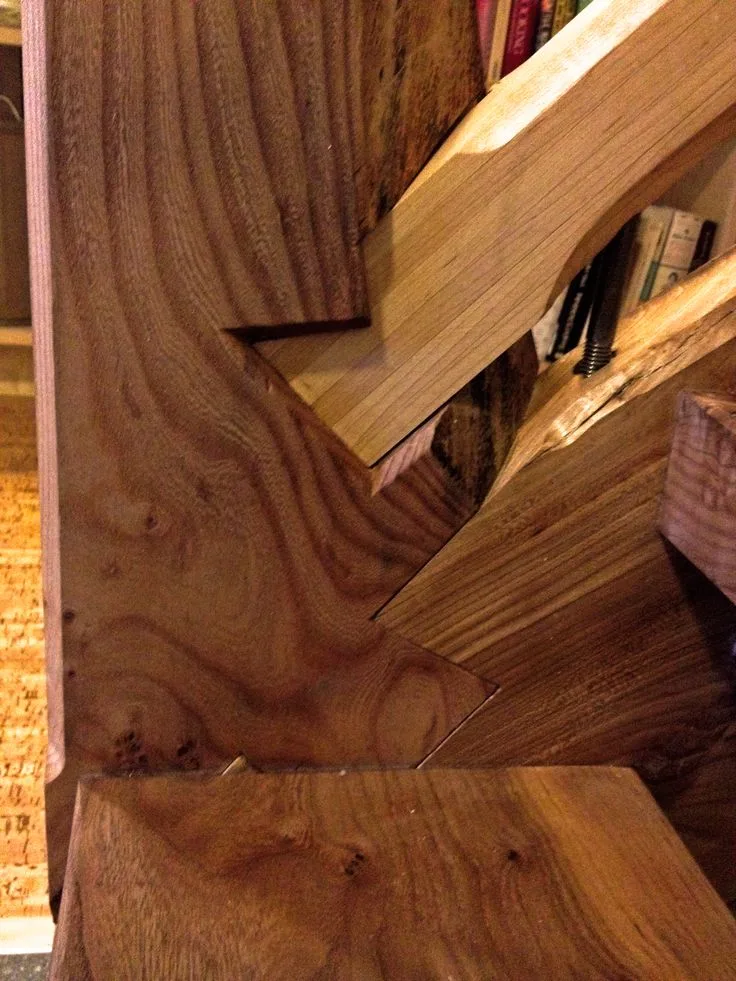
Where the treads meet the stringer

Each tread on this stair sits in a notch cut into the stringer, the side board that carries the steps. In the Junction’s century-old staircases, that joint is where a loose tread starts to move, and the fix is made tread by tread.

What we check in a Junction house

We date the house before quoting

An 1880s house has had more decades of movement and more old repairs than a 1910s one, and that shapes the quote.

Old repairs found first

Earlier nails, shims and patched boards are checked so a new fix does not fight an old one.

Localised repairs

We fix the boards making the noise and leave the rest of your floor alone.

Written quote, no obligation

See the scope and the price, then decide.

Our Toronto office, serving The Junction

Our Toronto office is at 4544 Sheppard Avenue East in Agincourt South-Malvern West. Call to book a free diagnostic visit, and the crew comes to your house in the Junction for the visit and the repair.

Junction Squeaky Floor Repair Pricing

These are budgeting ranges; your written quote sets the price. A main-floor squeak in a Junction house over an open basement typically sits in the single-squeak tier. Several rooms of loose plank, or an older floor carrying layers of earlier patch repairs, move the job toward the whole-room tier. Stairs are quoted per tread.

Diagnostic Visit

Free

We place the house in its building wave
We find the plank or tread that moves
No pressure to book anything after

Request a Visit

Whole-Room or Subfloor Work

$1,000 to $3,500 typical

Plank subfloor loose across rooms
Or layered old repairs to undo
Quote in writing before anything begins

Get a Free Quote
Our Process

How a Junction squeak is found and fixed

1

Tell us where in the Junction

North or south of Dundas, near the old Stockyards land or in the older streets, and where the noise is.

2

We date the floor from below

On the free visit we look at the joists and the underside of the subfloor, which usually places a house in one wave or the other, and check for earlier repairs.

3

Written scope, priced by tread or room

Scope and price in writing, with stairs priced per tread.

4

We refasten it and re-check it

We refasten the plank or tread, walk it again to confirm the noise is gone, and explain what caused it.

Customer reviews of floor repairs

5/5

We hired them to fix squeaking and movement in our hardwood floor. They identified the underlying problem quickly and completed the repair without needing to replace the entire floor. Everything now feels solid and quiet.

Jennifer

Direct Client

5/5

We needed an urgent flooring repair after several boards became loose and uneven. The team responded quickly, secured the boards, and corrected the uneven sections. Professional service and a high-quality repair from start to finish.

Robert

Direct Client

5/5

They repaired several damaged hardwood boards in our living room and blended the replacements beautifully with the existing floor. The team was punctual, tidy, and careful throughout the job. You can barely tell where the damage was.

Michael

Direct Client

Junction squeaky floor questions

Is there a way to tell whether our Junction house is from the 1880s or the 1900s?

Often, yes, and it usually shows in the floor structure and the fasteners rather than the facade. Because building largely stopped in the Junction between 1893 and 1900, houses tend to fall clearly on one side of that gap or the other. We can normally place a house once we can see the joists or the underside of the subfloor.

We are near the old Stockyards. Is our house the same as the rest of the Junction?

Probably not. The Ontario Stockyards operated at this site until 1993, and much of that land has since been redeveloped with new housing and retail, so homes in that quadrant are frequently modern construction rather than 1880s or post-1900 houses. That is a different floor system with different failure modes, and we diagnose it as such.

Do the stairs in an 1880s Junction house need different work from those in a post-1900 house?

The repair is usually the same, but the older stair needs a closer look first. Most of the noise in either traces to a loose tread, riser or wedge that can be refastened. An 1880s staircase has had at least a decade more use than one built after 1900, and more time to collect earlier patch repairs, so we check for old nails and shims before refastening. A rebuild only comes up if the stringer itself is compromised.

Hearing a squeak in your Junction house?

Tell us the street and where the noise is. The diagnostic visit is free, and the price comes in writing.

Back to top