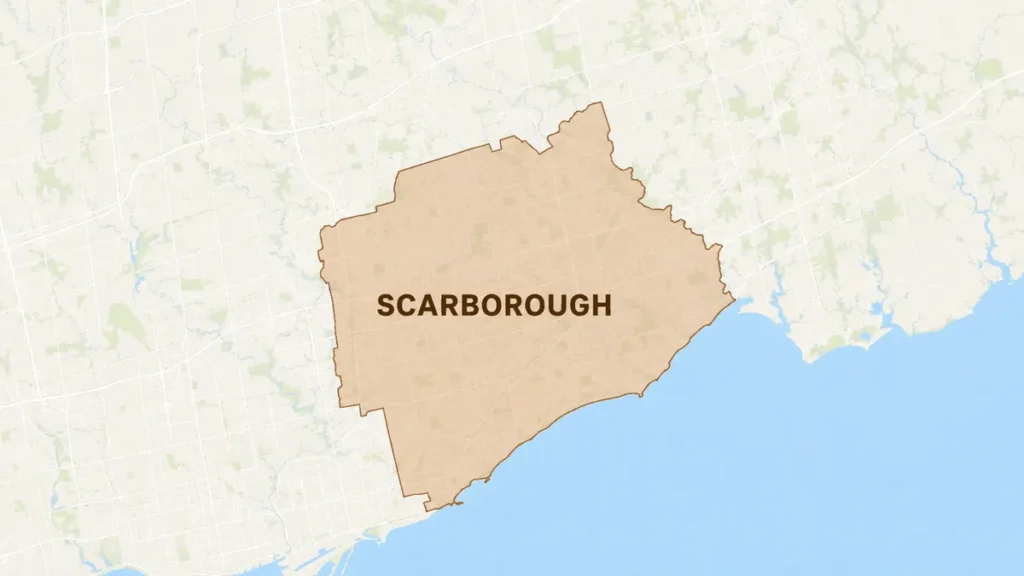
Postwar and Birch Cliff homes Serving Scarborough Free written quotes

Squeaky floor repair in Scarborough

Squeaky Floor finds and fixes the loose board, fastener or subfloor connection making the noise in Scarborough homes. Scarborough’s population doubled from 48,000 to 110,000 between 1950 and 1955, so most of its houses are postwar, and Birch Cliff, a 1920s streetcar suburb, is the older exception.

Get a Free Quote for Your Home

Tell us about your project and we will get back to you within 24 hours.

What can we help with?

So the right crew reviews your project.

No obligation. We reply within one business day.

Scarborough, 1950 to 1970

Scarborough: a postwar boom with one older corner

Most Scarborough houses date from one short, fast boom. When the township was established in 1850 it had about 3,000 people; between 1950 and 1955 the population doubled from 48,000 to 110,000, then tripled again by 1970, and the pace picked up after Highway 401 opened in 1956 (City of Toronto Archives, Scarborough Civic Centre exhibit). The farms became subdivisions of single family homes and apartment blocks, and by 1970 little of the rural township remained. The era-typical floor in those houses is plywood subfloor nailed to dimensional joists, now 55 to 75 years into seasonal movement.

Cliffside is a typical example: a large-scale subdivision of the early 1950s, built on subdivided farmland, with the area south of Kingston Road on a former golf course. Birch Cliff is the exception. It was the first part of Scarborough developed as a suburb, as a streetcar suburb along Kingston Road in the 1920s, while the rest was built after the Second World War around the car. Its floors are a generation older and more likely to be plank.
What we fix in Scarborough homes

1950s and 1960s subdivision houses

Nailed plywood over dimensional joists, the era-typical floor across most of Scarborough.

Birch Cliff 1920s houses

Streetcar-era houses near Kingston Road, more likely to sit on plank subfloor than their postwar neighbours.

Winter squeaks in postwar houses

Dry furnace air shrinks the joists and opens small gaps at nailed panels, so the noise builds through the heating season.

From one of our repairs

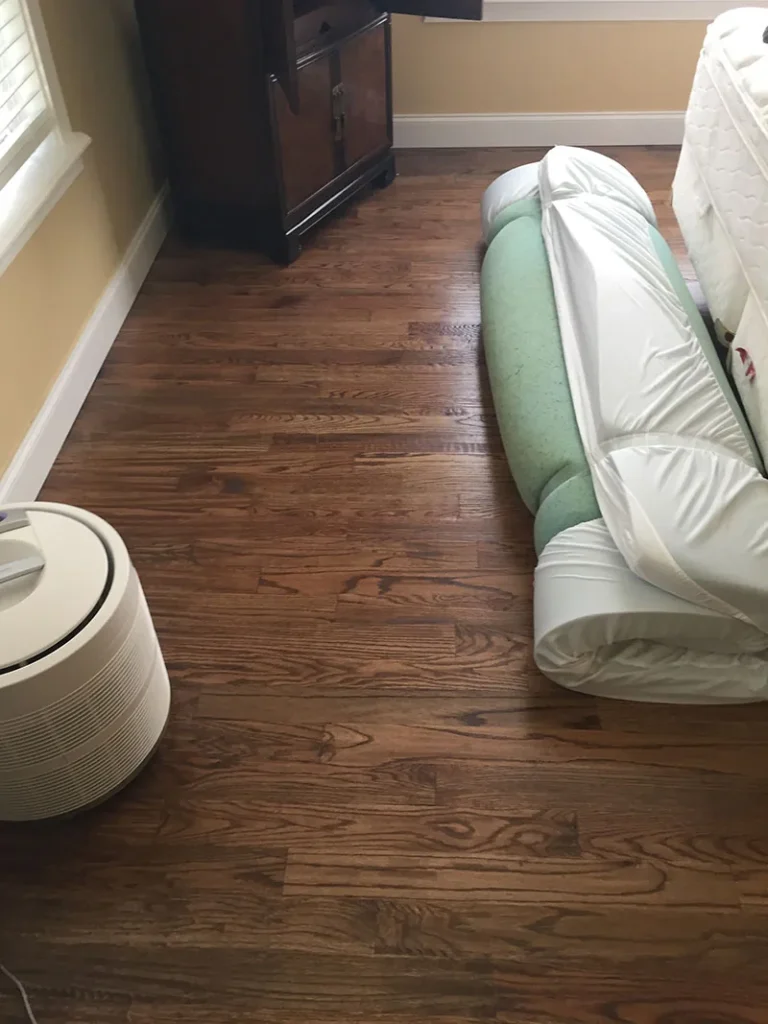
The finished floor after a water repair

This bedroom floor is finished and back in use, with the furniture still moved aside. After a water repair the new boards are matched to the existing floor so the repaired section does not stand out.

Before we quote a Scarborough repair

Our Toronto office is in Scarborough

It is at 4544 Sheppard Avenue East in Agincourt. It is an office, not a showroom, and visits are by prior arrangement.

Era checked first

A 1920s Birch Cliff house on plank subfloor and a 1960s house on plywood need different repairs.

Basement access checked

Where a postwar basement has since been finished, we decide with you whether to open a ceiling panel or work from above.

Free visit, written price

A written scope and price before anything begins, with no obligation to book.

Our Toronto office, serving Scarborough

Our Toronto office is at 4544 Sheppard Avenue East in Agincourt South-Malvern West. Call to book a free diagnostic visit, and the crew comes to your house in Scarborough for the visit and the repair.

Scarborough Squeaky Floor Repair Pricing

These are budgeting ranges; the written quote sets the price. A main-floor squeak in a postwar Scarborough house over an open basement typically falls in the single-squeak tier. A finished basement ceiling, or loose plywood across several rooms, moves the job toward the whole-room tier.

Diagnostic Visit

Free

In-home visit or a photo-based read
We find the panel or plank that moves
No pressure to book anything after

Request a Visit

Whole-Room or Subfloor Work

$1,000 to $3,500 typical

Several rooms of loose plywood
Access through a finished basement ceiling
Quote in writing before anything begins

Get a Free Quote
Our Process

From first call to a quiet Scarborough floor

1

Tell us the neighbourhood and the spot

Birch Cliff, Cliffside or a 1960s street further north: the era points us toward plank or plywood before we arrive.

2

We find the moving panel

On the free visit we walk the floor, find the squeak, and check from the basement whether a panel has lifted off a joist or a plank has worked loose.

3

A written quote before work

Scope and price in writing, including how we will reach the connection if the basement has been finished.

4

We close the gap and test it

We close the gap with shims, blocking or screws, walk the section again, and explain what caused it.

Customer reviews of squeak and loose-board repairs

5/5

We hired them to fix squeaking and movement in our hardwood floor. They identified the underlying problem quickly and completed the repair without needing to replace the entire floor. Everything now feels solid and quiet.

Jennifer

Direct Client

5/5

We needed an urgent flooring repair after several boards became loose and uneven. The team responded quickly, secured the boards, and corrected the uneven sections. Professional service and a high-quality repair from start to finish.

Robert

Direct Client

5/5

They repaired several damaged hardwood boards in our living room and blended the replacements beautifully with the existing floor. The team was punctual, tidy, and careful throughout the job. You can barely tell where the damage was.

Michael

Direct Client

Scarborough squeaky floor questions

Our Scarborough split-level squeaks on the short flight between levels. Is that different?

It is a distinct problem. Short flights carry heavy repeated traffic over a very small number of connections, so a single loose tread or a wedge that has backed out becomes obvious quickly. It is usually a straightforward repair once we identify which component is moving, and stairs are priced per tread, typically $175 to $450.

Our house is in Cliffside, Scarborough. How old is the subfloor likely to be?

If the floor is original, around seventy years. Cliffside was developed as a large-scale suburban subdivision in the early 1950s, as plywood was taking over from plank as the standard subfloor, so an original Cliffside floor can be either, and both were nailed rather than glued to the joists. A nail holds a board or panel down without pulling it tight where the joist is slightly out of plane, and decades of seasonal movement turn that small gap into a squeak. We confirm which subfloor you have, and whether a renovation has replaced it, before choosing the fix.

Scarborough grew fast after Highway 401 opened in 1956. Do houses from that boom squeak for the same reasons?

Mostly, yes. Houses from the late 1950s and 1960s sit on plywood subfloor nailed to dimensional joists, and fifty-five to seventy years of seasonal movement is plenty to loosen those connections. What varies more from house to house is later work, such as a finished basement that hides the joists or a wall removed upstairs, and that decides whether we repair from below or from above.

Hearing a squeak in your Scarborough house?

Tell us the neighbourhood and where the noise is. The diagnostic visit is free and the quote is in writing.

Back to top