Subfloor as well as surfaceCause identified firstFree written quotes
Water damage floor repair
Squeaky Floor repairs flooring and subfloor damaged by a leak or flood, once the source is stopped and the floor has dried, starting from what the water reached rather than only what you can see.
The visible damage is usually smaller than the wet area, and a floor has to read dry before any repair will hold.
Get a Free Quote for This Repair
Tell us about your project and we will get back to you within 24 hours.
No obligation. We reply within one business day.
Why water damage is bigger than it looks
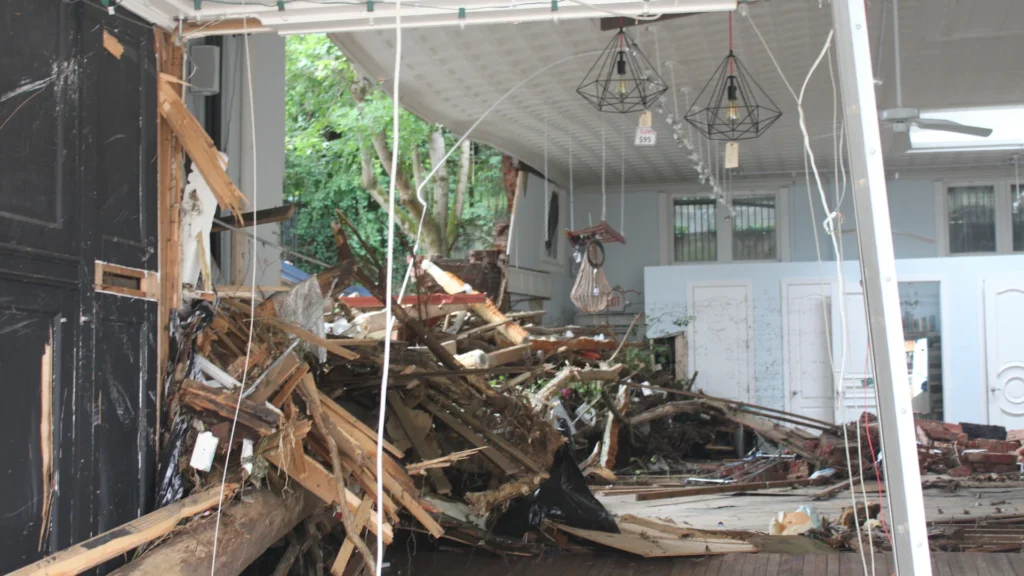
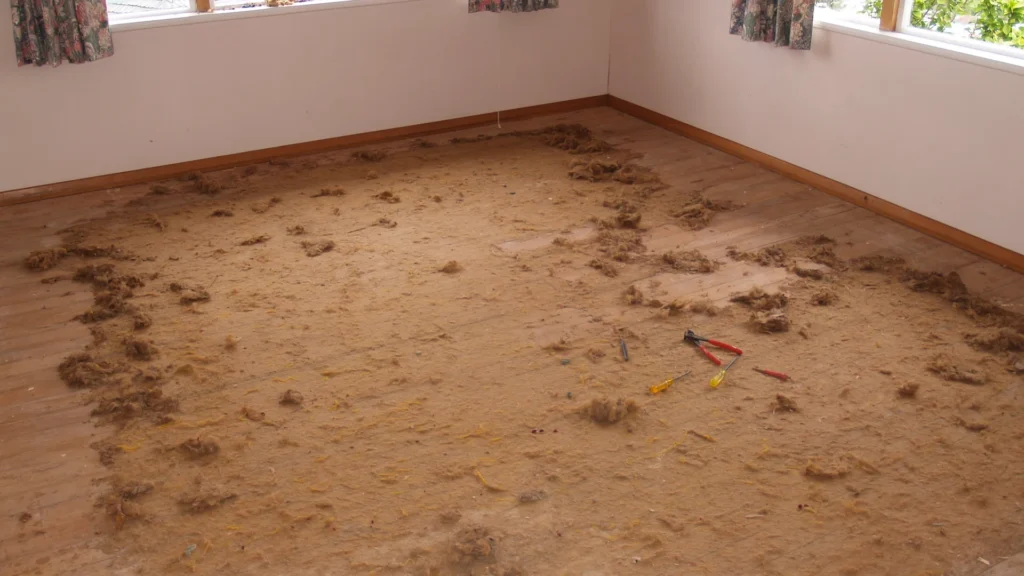
Water damage is bigger than it looks because water spreads sideways. A leak under a dishwasher or a burst supply line does not stay where it landed; it runs along the top of the subfloor, wicks into the end grain of flooring boards, and travels under cabinets and along joist bays where nothing shows. By the time flooring cups, buckles or stains, the wet area is almost always larger than the marked area, which is why the first job is establishing how far the water went rather than starting from the stain. Different materials fail differently. Solid hardwood cups as its underside takes on more moisture than its top. Laminate and engineered planks can swell at the edges or separate in layers once water reaches the core, and those planks are replaced. Vinyl can look untouched while trapping moisture against the subfloor beneath it. The subfloor swells too, and oriented strand board swells most at its panel edges. Some of that goes down as the panel dries, but an edge that stays raised will show through any flooring laid over it, so it is sanded flat once dry or the section is replaced. What we do is repair or replace the damaged subfloor sections and the affected planks or boards. If the whole floor has to come out and be replaced, that is a job for a flooring installer, and we will tell you so plainly.
Before any repair starts
Drying comes before the repair, and dry is a meter reading
A water-damaged floor is repaired only after it has dried, and dry means a meter reading, not a surface that looks fine. Health Canada notes that mould can begin to grow within 48 hours where moisture stays high, so the first job is getting the water out and air moving (Health Canada). Where water has reached floor or wall cavities and cannot be dried with fans and a dehumidifier, or where it was contaminated with sewage, Health Canada advises bringing in a professional. That is a water damage restoration company, and its drying comes before our floor repair.
Once the floor is drying, readings are taken on the wet boards, on a dry part of the same floor for comparison, and on the subfloor where it can be reached. On a cupped floor, a pin meter can show the top of a board several points drier than deeper down. A floor sanded or replaced before those numbers settle can look flat at first and crown later as the boards finish drying (Hardwood Floors, the NWFA’s magazine). Replacement boards go in only when the existing floor and the new wood read within 2 percentage points of each other.
Mould found during the work changes the order. Health Canada treats a single patch larger than 3 square metres as a job for a qualified professional, and that cleanup comes before any floor repair.
What water does to each kind of floor
Each material fails in its own way, which is why the assessment matters more than the first estimate.
Solid hardwood cupping
The underside absorbs more moisture than the top, so board edges rise. Often recoverable once it has dried, as long as it is not sanded too soon.
Laminate and engineered plank swelling
Edges swell or layers separate once water reaches the core. Those planks are replaced rather than waited out.
Subfloor panel swelling
Oriented strand board swells most at its panel edges. Some swelling goes down as it dries; edges that stay raised are sanded flat or the section is replaced.
Hidden lateral spread
Water travelling under cabinets and along joist bays, well beyond the area that shows a stain.
Trapped moisture under vinyl
A resilient floor can look undamaged while holding moisture against the subfloor underneath it.
How we approach water-damaged flooring
Confirm the source is stopped
There is no point repairing a floor that is still getting wet, so we establish that the leak is dealt with first.
Map the wet area with a meter
Readings across the floor and subfloor, compared with a dry part of the same floor, set the real extent before scoping.
Repair from the subfloor up
Damaged subfloor sections are repaired or replaced before the affected planks or boards go back down, rather than covering the problem.
What water damage floor repair typically costs
Typical budgeting ranges for this kind of work; your written quote sets the price. The spread is wider than for other floor repairs because scope depends on how far the water travelled and how much subfloor has to be replaced. The figures cover the floor repair, not drying or mould cleanup.
Most popular
Contained Area Repair
$600 to $2,200 typical
A single room or a contained spill area
Subfloor checked with a meter
Written quote once the extent is mapped
The source and the timeline matter, because how long a floor stayed wet shapes what is salvageable.
2
We map the wet area
Meter readings across the floor and subfloor, well beyond the visible stain, before anything is priced.
3
Written quote with a salvage read
What we expect to save, what has to be replaced, and what has to dry first, in writing you can give your insurer.
4
Repaired once it reads dry
Subfloor first, then flooring, once the readings are back in line, so the repair holds.
What customers said after leaks and loose floors
★★★★★
5/5
Our laminate flooring had lifted near the kitchen after a small water leak. They replaced the affected sections and repaired the surrounding area. The finished repair looks clean and matches the rest of the flooring very well.
★★★★★
5/5
We needed an urgent flooring repair after several boards became loose and uneven. The team responded quickly, secured the boards, and corrected the uneven sections. Professional service and a high-quality repair from start to finish.
★★★★★
5/5
They repaired several damaged hardwood boards in our living room and blended the replacements beautifully with the existing floor. The team was punctual, tidy, and careful throughout the job. You can barely tell where the damage was.
What you do before anyone arrives decides how much of the floor can be saved. Health Canada notes that mould can begin to grow within 48 hours where moisture stays high, so speed matters more than anything else here.
Stop the water at its source. Close the supply valve to the fixture or appliance, or the main shut-off if you cannot find it. If water is near outlets, cords or appliances, keep clear and have the power to that area turned off first.
Remove standing water. Use a wet-dry vacuum, a mop and towels, and lift wet rugs and mats off the floor.
Get air moving and dehumidify. Run fans across the floor and a dehumidifier in the room, and keep them going until the floor and subfloor are dry, not just the surface.
Photograph everything for insurance. Take pictures of the source, the standing water and every damaged area before you move or throw anything out.
Do not lay anything over a wet subfloor. No new flooring, plastic sheeting or rugs until it has dried, because covering it traps the moisture.
Call a restoration company for the big cases. If the water was sewage, or has got into walls, ceilings or the floor cavity below, Health Canada advises a professional. Drying comes first; the floor repair follows once it reads dry.
Water damage floor repair questions
Can a water-damaged hardwood floor be saved?
Sometimes, and it depends mostly on how long it stayed wet and what the subfloor did. Solid hardwood that has cupped often flattens substantially once the moisture source is gone and the floor has dried, which is why sanding it flat straight away is a mistake: it can crown later as the boards finish drying. Laminate and engineered planks that have swollen at the edges or separated in layers are replaced.
How do you know how far the water spread?
With a moisture meter rather than by eye. Water runs along the top of the subfloor and wicks into end grain, so it travels under cabinets, along joist bays and beneath adjoining rooms without leaving a mark. We take readings outward from the leak and compare them with a dry part of the same floor, because a quote based on the visible stain is a quote that will change.
Do you deal with the insurance side?
We provide a written scope and quote setting out what we found and what the repair involves, which is the documentation most people need for a claim. We are not insurance adjusters and we do not negotiate on your behalf, but a clear written assessment of the damage gives you something concrete to put in front of your insurer.
Our vinyl floor looks fine after a leak. Should we still check?
Yes, and it is a common trap. Resilient flooring such as sheet vinyl or glued LVP can look completely undamaged while holding moisture against the subfloor beneath it, where it has nowhere to evaporate. That is how a floor that appears fine develops a soft spot or an odour months later. A moisture reading on the subfloor, taken from below or at the edge of the floor, settles the question.
Does swollen subfloor have to be replaced?
Not always. Oriented strand board swells most at the panel edges when it gets wet. Some of that swelling goes down as the panel dries, and a ridge that remains can often be sanded flat once it is dry, before flooring goes back over it. A panel that has gone soft, or come apart in layers, is cut out back to the joists and replaced. We assess what you have once it has dried, rather than assuming the worst.
How long does a water-damaged floor need to dry before it can be repaired?
There is no fixed number of days. It depends on how long the water sat, what the floor and subfloor are made of, and how well the room can be dried. The test is the meter: the wet area has to read in line with a dry part of the same floor, and new wood has to read within about 2 percentage points of the existing floor before it goes in. Repairing sooner risks cupping or crowning afterwards. If the water got into wall or floor cavities, a restoration company's drying comes first.
Flooring warped or lifted after a leak?
Get a free written quote once we have mapped how far the water reached and the floor reads dry.
To provide the best experiences, we use technologies like cookies to store and/or access device information. Consenting to these technologies will allow us to process data such as browsing behavior or unique IDs on this site. Not consenting or withdrawing consent, may adversely affect certain features and functions.
Functional
Always active
The technical storage or access is strictly necessary for the legitimate purpose of enabling the use of a specific service explicitly requested by the subscriber or user, or for the sole purpose of carrying out the transmission of a communication over an electronic communications network.
Preferences
The technical storage or access is necessary for the legitimate purpose of storing preferences that are not requested by the subscriber or user.
Statistics
The technical storage or access that is used exclusively for statistical purposes.The technical storage or access that is used exclusively for anonymous statistical purposes. Without a subpoena, voluntary compliance on the part of your Internet Service Provider, or additional records from a third party, information stored or retrieved for this purpose alone cannot usually be used to identify you.
Marketing
The technical storage or access is required to create user profiles to send advertising, or to track the user on a website or across several websites for similar marketing purposes.