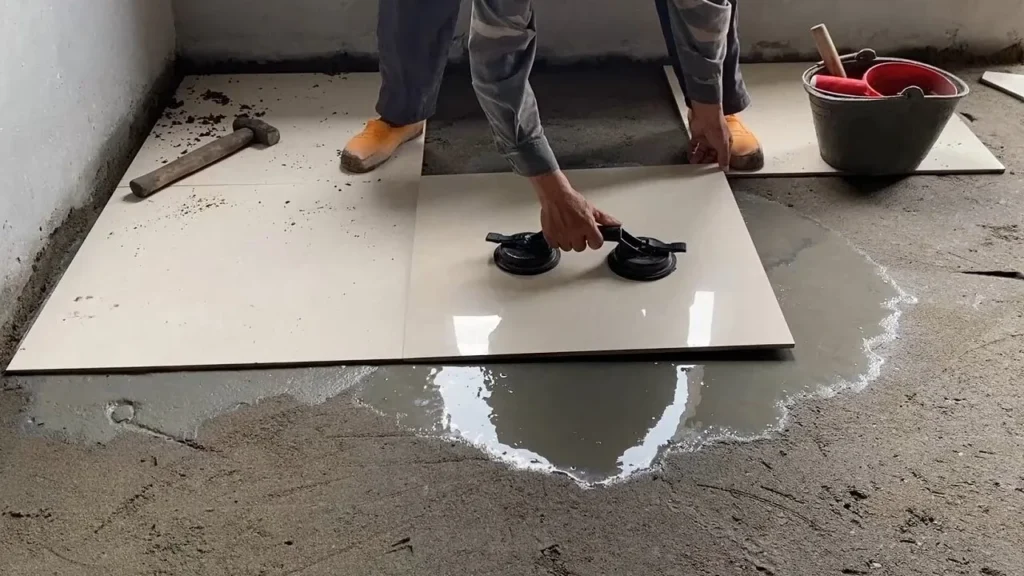
Loose and hollow tile Grout and bond failure Free written quotes

Tile floor repair

Squeaky Floor repairs cracked, loose and hollow-sounding tile and the failed grout that usually shows up first, and checks the floor underneath for the movement that caused it.

A tile that clicks or sounds hollow is telling you the bond underneath has released, or never fully formed.

Get a Free Quote for This Repair

Tell us about your project and we will get back to you within 24 hours.

What can we help with?

So the right crew reviews your project.

No obligation. We reply within one business day.

Tile does not squeak, but it does tell you things

Tile is rigid, so it does not creak the way a wood floor does. What it does instead is crack, come loose, and sound hollow when you tap it, and all three usually point at one of two things: a floor that moves more than tile can tolerate, or a bond that never covered enough of the tile. Tile is bonded to a substrate, and that bond assumes the substrate will stay still. If the subfloor deflects under load because the joist span was marginal, a panel has loosened, or a single layer of plywood was all the tile was set on, the tile above cannot flex with it. The bond releases in that area, which produces the hollow sound, and eventually a tile cracks or a grout line fails. Grout almost always goes before the tile does, because it is the weakest element in the assembly and shows movement first. That is why we treat a run of cracked grout as information rather than a cosmetic job. Regrouting a floor that is moving underneath gets you a tidy floor and the same cracks again.
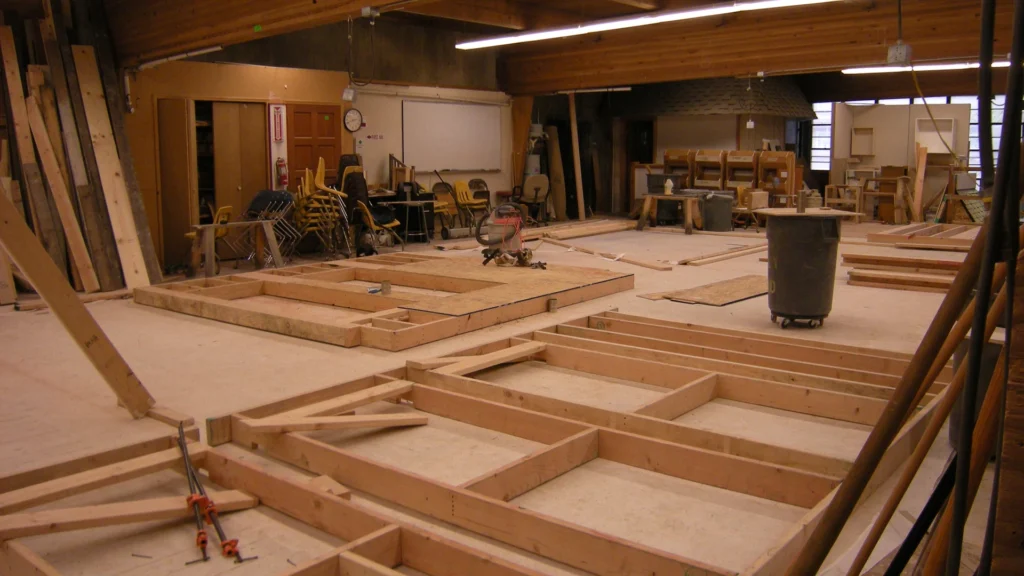
What the tile standards say

How stiff a floor has to be under tile, and how much mortar it needs

Tile needs a stiffer floor than wood or carpet does. The Terrazzo Tile and Marble Association of Canada sets the limit for a framed floor under tile at L/360: under load, the floor may deflect no more than 1/360 of the joist span. The stone industry asks for twice that stiffness, L/720. TTMAC also notes that a single layer of 19/32-inch plywood on joists at 16 inches can exceed L/360 under a concentrated load such as a fridge on a dolly, which is why its details call for two layers of 5/8-inch plywood, or a backer board or membrane system, under floor tile (TTMAC).

The second cause is the bond itself. The ANSI A108.5 standard for setting tile requires mortar contact under at least 80 per cent of each floor tile, and 95 per cent in showers and outdoors. Tile set on dabs of mortar at the corners and centre leaves voids underneath, and voids are where hollow sounds and cracks tend to start (Ceramic Tile Education Foundation).

A hollow sound on its own is not an emergency. Over wood or a sound-control mat, some well-bonded tile sounds slightly hollow. Hollow tile together with cracked grout or a cracked tile is the combination that points at a failed bond or a floor that is moving. Replacing those tiles holds only if the cause is dealt with: stiffening the floor below where the joists can be reached, or adding a second layer where they cannot, which means lifting the tile in that area. When most of a floor is hollow or cracking, the tile comes up and the substrate is rebuilt. Laying a whole new tile floor is a tile installer’s job; Squeaky Floor repairs the floor under it and the affected tiles.

What loose and hollow tile is telling you

The tile is rarely the problem. It is the messenger, and each sign points somewhere different.

Hollow sound when tapped

The bond has let go in that area, or the mortar never covered enough of the tile. Over wood, some sound tile rings slightly hollow too, so it is read with other signs.

Cracked grout lines

Grout is the weakest part of the assembly and fails first, which makes it an early warning rather than a cosmetic issue.

A crack running across several tiles

A line of cracks that follows a joist or a subfloor seam usually points at deflection underneath rather than impact damage.

A floor that bounces underfoot

Tile cannot flex, so any deflection beyond the L/360 limit goes into the bond and the grout.

Failed grout in a wet area

Grout is porous, so the membrane under the tile does the waterproofing. Cracked grout and failed caulk still let more water in, and where that membrane is missing or damaged the water reaches the substrate.

How we repair tile

Sound the floor first

Tapping across the area maps where the bond has released, which is usually a larger area than the visible damage.

Check what is moving below

Joist span, subfloor layers and any loose panel are checked from below where we can. If the floor deflects, new tile alone fails the same way.

Replace and rebond properly

Grout cut out around the tile, the tile broken out, old mortar scraped flat, and the new tile set in full contact with fresh mortar.

What tile floor repair typically costs

$350 to $1,200 is a typical budgeting range for this kind of work. It covers individual tiles or a run of grout. Whether a matching tile exists often decides the scope, and work beyond tile and grout, such as stiffening the floor under a tiled area, is set out separately in your written quote.

Our Process

From your call to a sound tile floor

1

Tell us what you are seeing

Cracked grout, a loose tile, a crack across several tiles, or a hollow sound. Each says something different about the cause.

2

We ask about matching tile

Whether you have spares from the original job, and whether the ceiling under the floor is open, because both change what is possible.

3

Written quote after sounding

We map the hollow area and check the floor below before quoting, since the affected area is usually larger than the visible damage.

4

Repaired and rebonded

Any movement below dealt with first, then tiles replaced, grouted, and the surrounding area sounded again.

What customers said about our floor repairs

5/5

We needed an urgent flooring repair after several boards became loose and uneven. The team responded quickly, secured the boards, and corrected the uneven sections. Professional service and a high-quality repair from start to finish.

Robert

Direct Client

5/5

They repaired several damaged hardwood boards in our living room and blended the replacements beautifully with the existing floor. The team was punctual, tidy, and careful throughout the job. You can barely tell where the damage was.

Michael

Direct Client

5/5

We hired them to fix squeaking and movement in our hardwood floor. They identified the underlying problem quickly and completed the repair without needing to replace the entire floor. Everything now feels solid and quiet.

Jennifer

Direct Client

Tile floor repair questions

Why does our tile sound hollow in places?

Because the bond between the tile and the substrate has released in that area, or the mortar never covered enough of the tile when it was set. Tapping a well-bonded tile gives a solid, dull sound; where there is an air gap underneath it rings hollow. It does not always mean the tile is about to fail, and over a wood subfloor or a sound-control mat some sound tile rings slightly hollow anyway. Hollow tile alongside cracked grout or a cracked tile is the combination worth acting on, and it is worth knowing how far it extends.

Our grout keeps cracking in the same place. Why?

Because something underneath is moving, and grout is the weakest element in the assembly so it shows that movement first. Regrouting alone will produce the same crack again. The useful question is what is deflecting below: a joist span that is marginal for tile, a loose subfloor panel, or a single layer of plywood where the tile standards call for a stiffer base.

Can you match our existing tile?

It depends entirely on the tile and how old it is. Current stock lines are often matchable; discontinued ones frequently are not, and even the same product from a different batch can vary in shade. This is why we ask early whether you have spares from the original installation. If an exact match is not possible we will tell you before you commit rather than after.

Is a cracked tile a structural problem?

Usually not structural in the sense of the house being unsafe, but it is often a sign of deflection rather than impact, particularly if the crack runs in a line across several tiles rather than radiating from a point. That points at the floor beneath flexing more than a tiled floor should. We would want to look at what is under it rather than just replacing the tile.

Should failed grout in a bathroom be treated as urgent?

More urgent than elsewhere, yes. Grout is porous and does not waterproof anything on its own; in a properly built wet area, a waterproofing membrane under the tile is what keeps water off the substrate. Grout and the caulk at changes of plane, where the floor meets the tub or a wall, only limit how much water gets behind the tile. Once they crack, much more gets in, and if the membrane is missing or damaged, that water reaches the material underneath and turns a small repair into a much larger one. It is worth addressing promptly rather than waiting.

Our tile floor flexes when we walk on it. Can it be stiffened without new tile?

Sometimes, if the joists under it can be reached. Where the basement ceiling below is open, the floor can be stiffened from underneath, for example with solid blocking between the joists, without lifting any tile. Where the problem is a subfloor that is too thin for tile, the fix is a second layer, and that means lifting the tile in that area first. We check which it is before quoting. A whole new tile floor is a tile installer's job; we repair the floor structure under it and replace the affected tiles.

Tile that clicks, cracks or sounds hollow?

Get a free written quote that addresses what is moving underneath, not just the tile.

Back to top