Board-level replacement Solid and engineered Free written quotes

Hardwood floor repair

Squeaky Floor repairs damaged, cupped and gapped hardwood board by board: damaged boards are cut out in place, new ones woven in and the finish blended, so the rest of the floor stays down.

Where moisture caused the damage, its source is found and the floor is read with a meter before any board is replaced.

Get a Free Quote for This Repair

Tell us about your project and we will get back to you within 24 hours.

What can we help with?

So the right crew reviews your project.

No obligation. We reply within one business day.

What goes wrong with hardwood other than noise

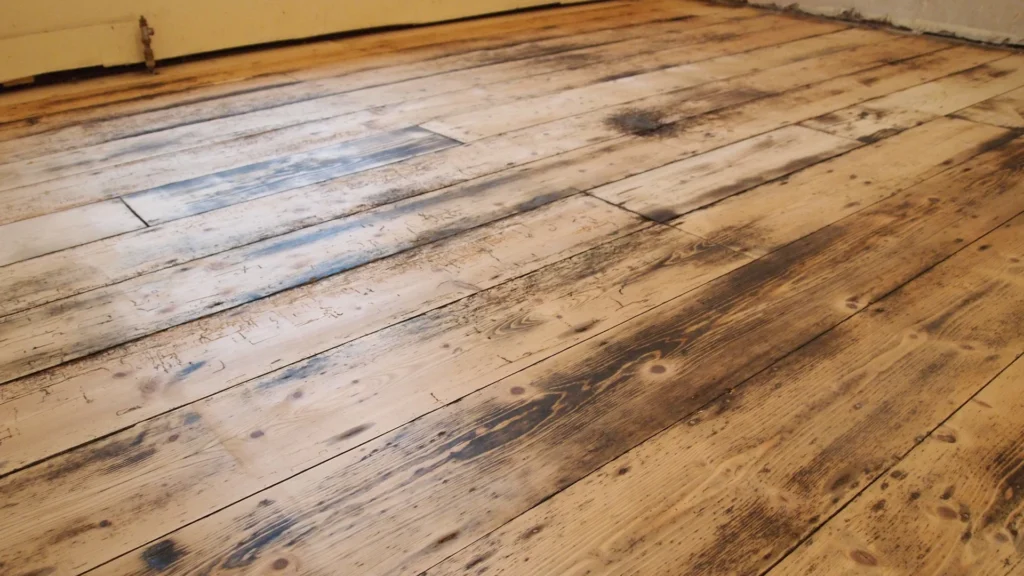
Apart from squeaks, hardwood fails in three ways: it cups or crowns from moisture, it gaps from drying, and it gets damaged. Cupping, where the edges of a board sit higher than its centre, happens when the underside of the flooring holds more moisture than the top, usually from a damp basement, a slab without a proper vapour barrier, or a spill that reached the subfloor. Gapping is the opposite: boards shrink away from each other as indoor air dries out over a long heating season, opening lines you can see. The National Wood Flooring Association treats gaps that open and close with the seasons as normal, and advises keeping a home between 30 and 50 per cent relative humidity year-round. Crowning, where the centre sits proud, often follows a cupped floor that was sanded flat before it had dried. Then there is plain damage: a board split by a dropped weight, a section worn through its finish in a doorway, or staining after a leak. All of these are board-level problems, which means they can be board-level repairs, without touching the rest of the floor.
How a board is replaced

Cutting out a damaged board and weaving in new ones

A damaged board is cut out in place, not pried up from the nearest wall. The saw is set to the thickness of the flooring so it does not cut into the subfloor. Two cuts run along the board about half an inch in from each edge, angled cuts across the middle split it, and the centre lifts out. The remaining strips come out with a sharp chisel, so the tongues and grooves of the boards on either side are not damaged, and old nails and adhesive are cleared from the subfloor.

The replacement board is cut to length and the bottom lip of its groove is removed so it can drop in from above. It is glued along the tongues and, on a nailed floor, face-nailed with the heads set below the surface and filled. On a glue-down floor, adhesive is spread under it to match the original. Before it goes in, the new board and the existing floor are checked with a moisture meter, and the two should read no more than 2 percentage points apart (Hardwood Floors, the NWFA’s magazine).

For a larger area, new boards are woven in rather than cut as a square patch. Replacement lengths are run so their end joints stagger by at least a foot, because a square patch leaves straight lines that read as a repair. Matching is the hard part. A new board of the same species often looks different from a floor that has darkened for decades, so the closest match can come from salvage, or from boards taken out of a closet and replaced there with new wood.

Repair stops making sense when the floor has been sanded to the end of its life, when damage covers most of the room, or when a moisture problem has ruined most of the boards. A whole new floor is a flooring installer’s job, and a full sand and refinish is a separate trade. Squeaky Floor repairs; it does not install, sand or refinish whole floors.

What we repair in a hardwood floor

Each of these is handled at board level, which keeps the sound part of the floor where it is.

Damaged or split boards

Cut out in place and replaced, with end joints staggered so the repair does not form a square.

Cupped boards

Edges higher than the centre. The moisture source is found and the floor left to dry, by meter reading, before anything is cut or sanded.

Gaps between boards

Gaps that close again in summer are seasonal and left alone. Gaps that stay open all year can be addressed.

Worn or damaged finish

Touched up in the area we have repaired. A full sand and refinish of the room is a different trade, and we say so when that is what the floor needs.

Boards lifted off the subfloor

Refastened where the board is sound, replaced where it has split.

How we repair hardwood

Read the moisture before cutting

Meter readings on the damaged boards, the sound floor and the subfloor show whether the floor is still wet. Sanding a cupped floor before it has dried can leave it crowned later.

Cut out, do not pry up

Damaged boards are cut out in place and new ones woven in with staggered joints, so the boards around them keep their fastening.

Blend the repair in

Matching species, width, grain direction and finish as closely as the existing floor allows, so the repair does not announce itself.

What hardwood floor repair typically costs

Typical budgeting ranges for this kind of work; your written quote sets the price. The small-area tier covers a handful of boards cut out and replaced. The whole-room figure covers hardwood work only; where the subfloor under the boards also has to be reached, budget $1,000 to $3,500. How closely the existing floor can be matched, and whether boards have to come from salvage, moves a job within its range.

Whole-Room, Hardwood Only

$600 to $2,200 typical

Larger runs of damaged or cupped boards
Hardwood work only, no subfloor access
Moisture source identified before cutting
Full scope agreed before starting

Get a Free Quote
Our Process

From your call to a repaired hardwood floor

1

Send us photos

A wide shot of the room and a close-up of the damage show the board width, the finish and how far it spreads.

2

Moisture readings on site

At the free diagnostic visit we take meter readings on the damaged boards, the sound floor and, where it can be reached, the subfloor.

3

Written quote with a match note

How close a match we expect, where the replacement boards would come from, and the price, before you commit.

4

Repaired and blended

Boards cut out, new ones woven in and the finish blended, then walked through with you.

What customers said about their hardwood repairs

5/5

They repaired several damaged hardwood boards in our living room and blended the replacements beautifully with the existing floor. The team was punctual, tidy, and careful throughout the job. You can barely tell where the damage was.

Michael

Direct Client

5/5

They repaired deep scratches and chipped areas in our hardwood flooring. The available repair options were explained clearly and the results were excellent. The floor looks refreshed, and the damaged spots are no longer noticeable.

Amanda

Direct Client

5/5

We hired them to fix squeaking and movement in our hardwood floor. They identified the underlying problem quickly and completed the repair without needing to replace the entire floor. Everything now feels solid and quiet.

Jennifer

Direct Client

Hardwood floor repair questions

Can you match our existing hardwood?

Usually closely, sometimes exactly, occasionally not. It depends on the species, the width and profile of the boards, how much the existing floor has aged and darkened, and whether the finish is a stain or a natural oil. A new board from a store often looks different from a floor that has been down for decades, which is why salvage or a board borrowed from a closet is sometimes the better match. We give you a clear read on the likely match before you commit, because a repair that stands out is worse than no repair for some people.

Our hardwood has cupped. Can that be flattened?

Sometimes, but not by sanding it, at least not first. Cupping means the underside of the boards has taken on more moisture than the top, so the priority is finding and fixing that moisture source and letting the floor stabilise. Boards often flatten substantially on their own once the cause is removed, and only then is it clear which boards, if any, need replacing.

How long does cupped hardwood need to dry before boards are replaced?

There is no fixed number of days, so it is measured rather than guessed. A pin meter shows the moisture near the top of a board and deeper down, and on a cupped floor the underside reads wetter. Boards are replaced, or the floor sanded, only once those readings have settled and the new boards read within about 2 percentage points of the existing floor. Sanding a cupped floor flat while the underside is still wet leaves it looking flat for a while, then it can crown as the boards finish drying.

Do gaps between our hardwood boards need repairing?

Not always, and it is worth waiting to find out. The National Wood Flooring Association treats gaps that open in winter and close again in summer as normal seasonal movement, and filling them causes problems when the boards expand again. Keeping indoor humidity between 30 and 50 per cent year-round, as the NWFA advises, limits how far they open. Gaps that stay open all year are a different matter and can be addressed. We would want to know what the floor does in both seasons before recommending filling.

Is it cheaper to repair hardwood or replace the room?

Repair, in most cases, and often by a wide margin. Board-level replacement uses a small amount of material and targeted labour, while replacing a room means removing a floor that is largely sound, buying new material for all of it, and reinstalling. Replacement makes sense when the floor has been sanded to the end of its life or the damage covers most of the room, and that is a job for a flooring installer rather than for us.

Can you repair deep scratches and chips in hardwood without refinishing the whole floor?

Yes, when the damage is in specific spots. A deep gouge or a chipped board edge is repaired by replacing the damaged boards and blending them in, and smaller marks in a board that is otherwise sound can be filled and the finish touched up in that spot. We explain which option suits each mark before we start. The limit is spread: if scratches cover the whole room, that calls for a full sand and refinish, which is not work Squeaky Floor does.

Do you refinish floors as well as repair them?

No. We do not sand and refinish whole floors. Our work is repair, which includes treating a damaged finish locally in the area we have worked on. A full sand and refinish of an entire room is a different trade, and if that is what your floor needs we will tell you so rather than sell you a repair that will be sanded away six months later.

Damaged boards you would rather not replace the room for?

Get a free written quote for board-level repair blended into your existing floor.

Back to top